
Last updated: November 28, 2026
Quick answer: build the budget around five categories—lodging, transport, food, beach-only costs, and extras—before you book. A family beach trip budget works best when the shore-specific costs come first: parking, resort fees, beach gear rental, groceries, and food near the water. How to budget a family trip to a beach destination starts with those beach-only charges, not a generic vacation estimate.
Last updated: November 2026

Jump to: Key takeaways | Budget steps | Beach costs | Parking and fees | Food budget | Free activities | Common mistakes | FAQ
Key takeaways
- Start with the costs that change at the coast, not with a hotel guess.
- Parking, resort fees, and rental chairs can add up fast because they hit every day of the stay.
- Groceries usually save money only if the lodging has a fridge, freezer, and a place to prep food.
- Free beach activities matter because they cut the pressure to spend on tours and attractions.
- A simple worksheet from the Consumer Financial Protection Bureau can help keep each category separate: CFPB budgeting tools.
How do you budget a family trip to a beach destination?
Budget a family trip to a beach destination by listing every cost bucket before you book anything, then filling each bucket with a realistic range. The point is to avoid the common trap of booking lodging and then discovering that parking, beach gear rental, and meals near the shore push the total far past plan.
-
Use a budgeting worksheet and list five core buckets: lodging, transport, food, beach-only costs, and extras. The Consumer Financial Protection Bureau has a budgeting worksheet that fits this kind of planning: CFPB budgeting tools. Put one line under beach-only costs for resort fee, parking, and beach gear rental so those charges do not hide inside “miscellaneous.”
-
Use the destination page and separate fixed costs from daily costs. Fixed costs include the room, rental car, and any required resort fee; daily costs include parking, snacks, drinks, and gear rental. A three-night trip can look cheap until a family pays for parking on each day and rents chairs or an umbrella more than once.
-
Use a daily cap and assign money for food before the trip starts. If the lodging has a kitchen, groceries can cover breakfast, lunch, and some snacks, while dinners near the shore usually cost more. A practical move is to decide in advance how many meals will be eaten out and how many will come from groceries.
-
Use a beach activity list and pencil in free plans first. Walking the shoreline, swimming, shell collecting where allowed, and sunset watching cost little or nothing. Once those are on the calendar, it becomes easier to see whether paid boat rides or amusement add-ons actually fit.
-
Use a buffer line and reserve money for the surprise costs that show up at beaches. Parking rules change from one lot to the next, a resort may add a fee at checkout, and gear rental can tempt a family into overspending on the spot. A buffer keeps those charges from ruining the rest of the trip.
That structure fits the budgeting guide best, and it is also a useful place to start before reading the rest of the budget planning cluster on the site, including the family vacation budget guide and the beach vacation checklist.
What costs show up at a beach destination?
A beach destination usually adds four costs that a city trip may not have: parking, resort fees, beach gear rental, and food priced for tourists. These costs matter because they repeat during the stay, not because they are dramatic on their own. A $15 parking charge, a $25 gear rental, and one expensive lunch can turn a calm budget into a messy one.
| Cost bucket | Why it matters at the shore | Budget risk |
|---|---|---|
| Parking | Lots near sand and boardwalks may charge by the day or by the hour | Easy to miss when booking lodging far from the water |
| Resort fee | Some hotels add a mandatory fee beyond the room rate | Can make a low nightly rate misleading |
| Beach gear rental | Chairs, umbrellas, and cabana-style setup often cost extra | Repeats for each day you want comfort on the sand |
| Groceries | Fridge-friendly food helps lower meal costs | Only useful if the lodging supports storage and prep |
| Food near the shore | Restaurants and snack stands often price for location | Quick meals can cost more than expected |
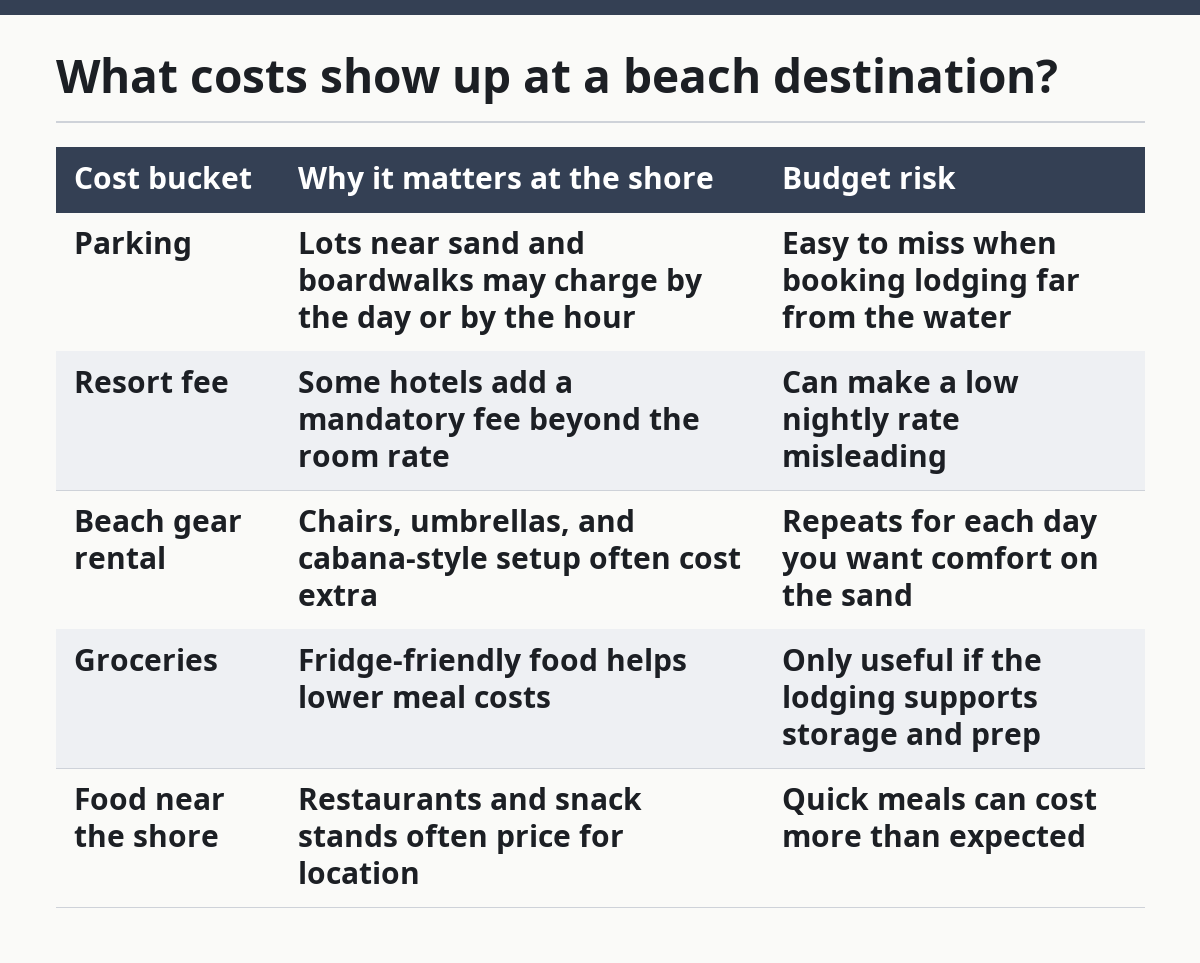
A common mistake is to treat “beach access” as free and stop there. The beach itself may be open, but the path to it often is not free once parking, shuttle fees, or a resort fee enters the picture. National Park Service fee pages are a good reminder that even public destinations can have separate access charges: NPS fees and passes.
The same applies to groceries. A family that books a place with a kitchen can save money, but only if that kitchen actually has the basics needed for breakfast and simple lunches. A small fridge without freezer space is weaker for ice packs, cold drinks, and prep than many people expect.
The cleanest way to compare options is to total the stay by category, not by nightly room rate alone. A room that looks cheaper may cost more once parking and resort fees are added. That is why this budget method works better for a beach destination than a generic vacation spreadsheet, and it pairs well with a resort fee guide.
How do parking, resort fees, and beach gear rental change the total?
Parking, resort fees, and beach gear rental change the total because each one can repeat across multiple days and each one is easy to forget when the room rate looks attractive. The room is only part of the bill. At a beach destination, the daily extras often decide whether the trip stays inside budget.
Parking deserves the first line. If the family drives, the trip may need a lot budget for every day, not just the arrival day. A hotel that charges for parking can also turn an otherwise decent stay into a poor value if the beach is not walkable.
Resort fees are more complicated because they are often mandatory, but if the fee is unclear or disputed, consult a qualified travel or financial professional before relying on a booking screen alone. The rate on the booking screen may look lower than a nearby property, then the fee appears later and narrows the difference. Budget for it as a separate line so the trip math stays honest, and check the hotel’s own fee disclosure before you book.
Beach gear rental sounds small until a family rents chairs, an umbrella, and maybe a cabana-style setup for several days. The beach gets expensive fast when comfort is purchased one item at a time. A family that plans to spend most of the day on the sand should decide in advance whether the rental cost is worth the convenience.
One sensible method is to compare two versions of the trip: “basic beach day” and “comfortable beach day.” Basic includes towels and a quick visit. Comfortable includes chairs, shade, and maybe a cooler. The gap between those two versions is the extra cost that needs to fit inside the budget.
The downside is simple: the more time a family wants to spend right on the sand, the more these charges matter. This is not the section to ignore if the destination is known for paid parking or hotel fees.
What should groceries and food near the shore budget cover?
Groceries and food near the shore should be budgeted as two different categories because they behave differently. Groceries are controlled, while meals near the shore are convenience spending that can climb quickly. A family that lumps both into one food number usually underestimates the trip.
Groceries work best when the lodging has a real fridge, a freezer compartment, and enough counter space for simple prep. The goal is not to cook every meal. The goal is to remove the most expensive parts of the day: breakfast out, drinks on the boardwalk, and every snack bought in a rush.
A practical grocery list for a short beach stay usually includes breakfast items, sandwich basics, fruit, drinks, ice, and a few easy snacks. The exact list matters less than the habit of buying items that can carry more than one meal. One loaf of bread, a jar of spread, and a cooler bag may not sound glamorous, but they can save a family from paying tourist pricing three times a day.
Food near the shore needs a separate line because the setting changes the bill. A lunch on the waterfront is often more expensive than the same food a few blocks inland. If the family wants to eat close to the beach each day, the budget should assume that the convenience is part of the price.
Because of that, pre-assign meal types before the trip: some meals from groceries, some from simple counter-service stops, and maybe one special sit-down meal if it fits. That keeps the plan realistic without making every day feel stripped down.
This part is where beach trips often go off course. Parents plan for lodging and one big dinner, then spend extra on drinks, snacks, and impromptu meals because everyone is hungry after sand and sun. A separate food budget makes those smaller purchases visible before they pile up.
Which free beach activities keep the day cheap?
Free beach activities keep the day cheap by filling time without adding another ticket, rental, or reservation. That matters because a beach trip can become expensive simply from trying to entertain everyone from morning to night. A free plan lowers both cost and decision fatigue.
Start with the obvious options: swimming where it is allowed, walking the shoreline, watching the sunset, collecting shells where permitted, and building sand structures with the family. These cost nothing beyond the entrance and whatever parking the destination requires. They also work well for mixed ages, which helps when one child wants action and another wants quiet.
A free plan also helps with food costs. If the family already has a full day mapped out around sand, water, and walks, there is less pressure to buy paid entertainment between meals. A cooler with snacks and drinks becomes more useful when the day has a clear structure.
The mistake here is assuming free activities are only for the start or end of the day. They can anchor the whole stay. A family that spends the morning in the water and the late afternoon on the sand may not need a boat tour, arcade stop, or paid attraction every day.
That does not mean every paid activity is a bad idea. If you are unsure how to classify discretionary spending, consult a qualified financial professional; the CFPB budgeting worksheet can also help separate wants from needs. In that case, the budget should treat paid fun as an add-on, not the main plan. If a boat trip or guided outing matters, fit it into the budget after parking, food, and resort fee are covered.
For families who want the beach to feel full without feeling expensive, free activities are the backbone of the trip.
What mistakes blow up a beach trip budget?
The biggest budget mistakes are forgetting shore-specific fees, assuming every meal can be bought cheaply, and booking lodging without checking what the room actually supports. These errors are common because the beach feels like a simple trip until the add-ons start showing up.

One mistake is ignoring parking. A family may choose a place that is a few dollars cheaper per night, then spend far more on daily parking than the room saved. The fix is to total the stay with parking included before making the booking.
Another mistake is treating resort fees as optional. That is not a safe assumption if the hotel says the fee is mandatory, and the Consumer Financial Protection Bureau recommends reviewing all charges before you commit to a purchase. They are not optional when they appear on the bill, and they can change the true cost of a property. The fix is to list the fee with the lodging cost, not in a separate mental bucket.
A third mistake is renting gear without a plan. Chairs, umbrellas, and similar items are easy to accept on impulse because the beach is already hot and crowded. The fix is to decide in advance whether the family will rent, bring, or skip that gear.
The last mistake is poor food planning. A family that buys snacks and drinks one by one often spends more than the person who shopped once for the stay. The fix is to budget groceries first, then leave a smaller amount for shore-side meals and treats.
This guide is not the right fit for a traveler who wants to spend almost every hour on paid tours and restaurant meals. In that case, the family is not trying to control beach-trip costs as much as choosing a comfort-heavy trip, and the budget should be built in a different way.
What costs the most on a family beach trip?
Lodging usually takes the biggest share, but the final total often jumps because of beach-only extras. Parking, resort fees, food near the shore, and beach gear rental can all add up across several days. If the room looks cheap on its own, those add-ons are the first place to check.
How do you save money at a beach destination?
The easiest savings come from pricing the hidden shore costs before booking. Compare parking, resort fees, and food options, then use groceries for breakfast and some lunches. Free beach activities also help because they reduce the need for paid entertainment every day.
Is a beach vacation cheaper with a condo?
A condo can be cheaper if it cuts food costs and avoids some restaurant meals. It is not always cheaper if parking fees, cleaning charges, or a worse location erase the savings. The key question is whether the condo truly lowers the total after groceries, transport, and access costs are added.
FAQ
How far in advance should I budget for a beach trip?
Budget as soon as you know the destination and travel dates. That gives you time to compare lodging, parking, and meal costs before the room rate locks in.
What is the simplest way to keep the budget from drifting?
Use one worksheet and one daily cap for the trip. A single budget sheet makes it easier to see when parking, groceries, or extras start to climb.
Should I build the budget around the hotel first or the activities first?
Build it around the full beach trip cost first, then add activities after the basics are covered. That usually means lodging, transport, food, and beach-only costs come before paid fun.
What should I check before relying on groceries to save money?
Check for a fridge, freezer space, and a place to prep food. Without those basics, the grocery budget may not lower costs as much as expected.
Drafted with AI; not yet reviewed by a person.