Last updated: November 20, 2026
Quick Answer: a family campground saves money when the campsite fee plus gear and add-ons stay below the cheapest realistic alternative for the same 1-night or 3-night trip. In other words, the question in How to Judge Whether a Family Campground Saves Money Once You Add Gear and Fees is not “Is camping cheap?” It is “What does one night or one weekend cost once you count the tent, the cooler, the camp stove, the shower fee, and every small purchase that keeps the trip comfortable?”
Key takeaways
- The posted campsite rate is only the start; gear and convenience costs can matter just as much.
- A tent site usually costs less than a cabin, but a cabin may reduce what you need to buy or rent.
- Food prep at a campground can save money only if you already have the tools to cook and store food.
- Shower fees, firewood, ice, and rentals are small line items that can quietly change the budget.
- The option that lowers the total trip bill is often better value than the nightly rate alone.
What counts as the real cost of a family campground?
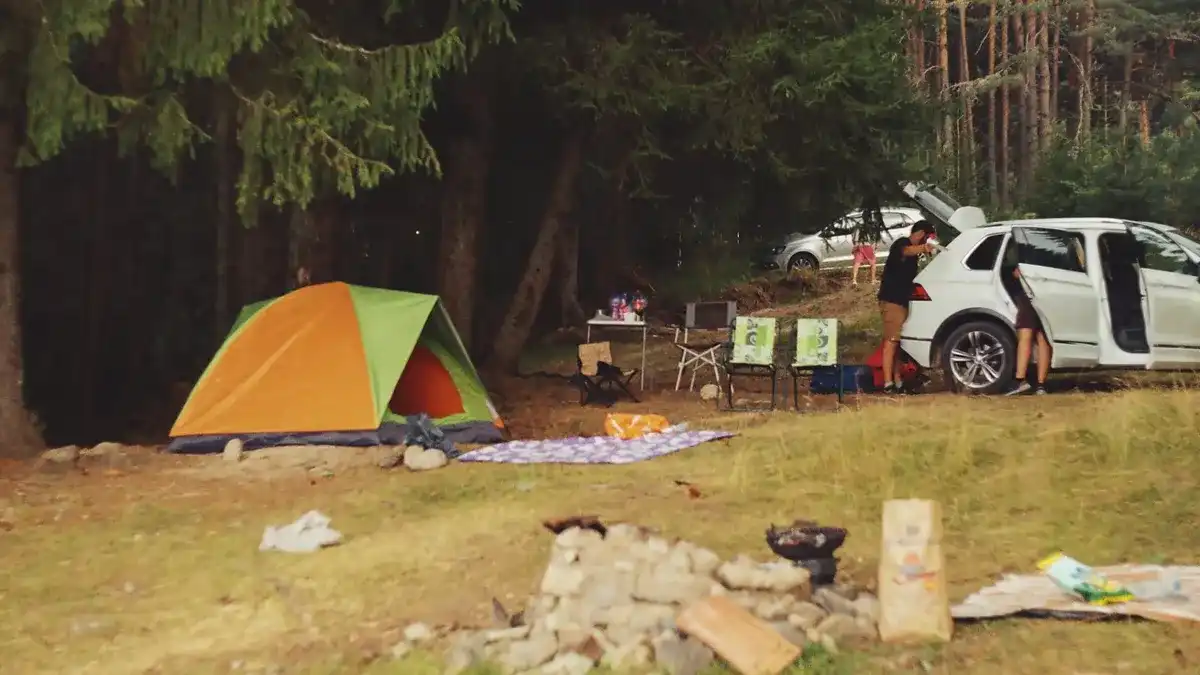
The real cost of a family campground is the campsite fee plus every extra item you need to make the stay work. A “cheap” site can stop being cheap once you add a tent, sleeping gear, a cooler, a camp stove, fuel, food storage, shower fees, and firewood.
A simple way to think about it is this: if a campground rate looks low but the stay needs a long list of purchases, the savings may be thin or gone. A tent site with no hookups can be fine for 1 night if the gear already lives in your closet. It is a different story if the trip starts with buying a $100 tent, a $40 stove, and a cooler before a single meal is cooked.
The biggest mistake is comparing a campground only to a hotel room price. That misses the gear stack on the camping side and the hidden charges on the hotel side. A fair judgment compares total trip cost for the same number of nights, the same number of people, and roughly the same food plan.
Use this as the starting list for the cost stack:
- campsite fee
- equipment rental or purchase
- firewood
- shower fee
- ice
- cooking fuel
- food prep supplies
- parking fees, if any
- extra clothing or rain gear
A cabin changes the equation because it may already include walls, beds, and sometimes a better place to cook or sleep. A tent site can still win on price, but only if the trip does not require a lot of new gear or paid extras. The budget question is not “camping or not camping.” It is “which setup gives the lowest total for this trip?”
For a broader planning lens, this article fits the same budget logic used in the site’s budget family trip planning hub on lodging value and room features.
How do I compare the campsite fee to the gear list?
You compare them by adding the trip costs into one short list before you book. That list should include the campsite fee, the gear you must buy or rent, and the small on-site charges that show up after arrival.
Here is a practical way to do it:
- Write down the campsite fee for the exact stay length, such as 1 night or 3 nights, so you are not guessing from a weekly rate.
- List the gear you already own, then list the items you still need, such as a tent, sleeping bags, a cooler, a camp stove, and lanterns.
- Mark each missing item as buy or rent. A rental is a trip cost; a purchase is still a cost if you only use it once or twice a year.
- Add the convenience fees that are easy to miss: shower fee, firewood, ice, and cooking fuel.
- Compare that total with the cheapest realistic alternative for the same trip length, not with a vague “hotel” or “vacation rental” idea.
That process works because it forces the hidden costs onto the page. A campground can look like the low-cost choice until the total includes a $0 campsite but a $60 gear run, or a modest site fee plus a shower fee and firewood each day. The goal is not to produce a perfect spreadsheet. The goal is to stop undercounting the trip by 30% or more in your head.
One useful standard is to separate one-time gear from trip-only spending. A tent that will be used for many trips belongs in a different bucket from ice for 2 nights. If you plan to camp again soon, the tent cost can be spread out. If the trip is a one-off, the tent behaves more like a price tag on the trip itself.
This is also where the time burden matters. A camp stove and cooler may be cheaper than eating every meal out, but only if you are willing to shop, pack, store cold food, and cook outdoors. If that work will push the trip toward restaurant meals anyway, the campground stops looking as budget-friendly.
Which extra fees usually erase the savings?
The most common savings killers are shower fees, firewood, ice, rentals, and food bought on site. They are small enough to ignore when booking, but they add up fast over a 2-night stay.
A shower fee can matter more than people expect because it affects each person, not just the site. Firewood is another easy trap. If the campground requires purchased wood or bans outside wood, the price of an evening fire is no longer “free with the site.” It becomes a line item, and it can repeat each night.
Equipment rentals change the calculation in the same way. A family that rents a tent, sleeping pads, or cooking gear should treat those charges like part of the lodging bill, not like a side note. If a family is unsure whether a rental is worth it, a travel planner or campground staff member can help estimate the total, and the National Park Service camping guidance and NFPA camping safety pages are useful reference points for what campsites typically allow. Rentals can make sense for a first trip, but they can erase most of the savings if the rate is close to a low-cost cabin or the stay is only 1 night.
Food is the biggest swing factor after the campsite itself. A cooler and camp stove can reduce restaurant spending, but only if the menu is simple and the setup is already in hand. If a trip adds extra snack runs, forgotten ingredients, or convenience food because the kitchen setup is weak, the “budget” trip gets expensive fast.
Common cost traps:
- buying a new tent for a single weekend
- paying for 2 or 3 showers per person
- assuming firewood is included
- counting restaurant meals as “just one dinner”
- renting a cooler or stove when the trip is short
A campground works best when the trip uses gear you already own and food you already know how to cook. It works worst when every missing piece gets bought at the last minute. That is the difference between true savings and a low sticker price that hides a fuller bill.
For camping-specific site rules and outdoor safety basics, the National Park Service camping guidance and the National Fire Protection Association’s camping pages are useful reference points.
Is a tent or cabin the better money move?
A tent is usually the cheaper option on the price tag, but a cabin can be cheaper in the full trip total. The right choice depends on how much gear you already have and how much convenience the cabin provides.
| Option | What usually lowers cost | What can raise cost | Best fit |
|---|---|---|---|
| Tent site | Lower posted campsite fee; works well if gear is already owned | New tent, sleeping gear, cooler, stove, shower fee, firewood | Short trips with gear already on hand |
| Cabin | Less gear to buy or rent; better weather protection; sometimes easier food setup | Higher nightly rate; add-on fees may still apply | Trips where missing gear would be expensive |
| Cabin with minimal cooking | Fewer food-prep purchases and less packing | Dining out can replace savings | Families who want fewer moving parts |
| Tent with full kitchen gear | Lower lodging cost and more control over food | Up-front purchase of stove, cooler, utensils | Repeat campers who use the gear often |
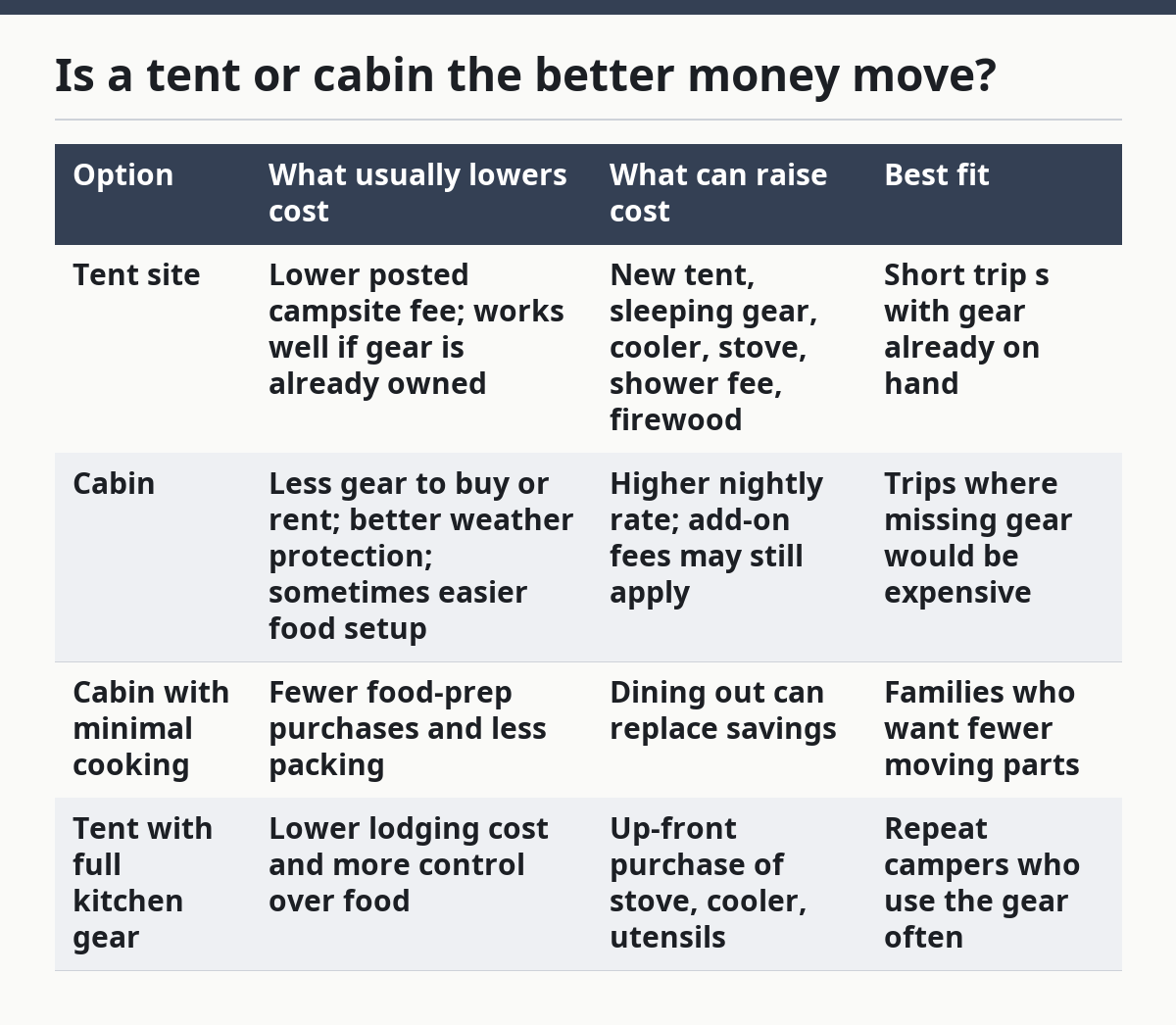
A tent site can be the best money move when you already own the basics: a tent, sleeping bags, pads, a cooler, and a camp stove. In that case, the trip cost stays close to the posted rate plus food and small fees.
A cabin becomes more appealing when you would otherwise need to buy several items at once or rent them at a high daily rate. It can also reduce the need for extra clothing, specialty bedding, and some food-prep gear. That said, a cabin is not automatically cheaper just because it removes setup work. If the nightly rate is much higher, the cabin can cost more even after gear savings.
The wrong move is choosing a cabin only because a tent sounds cheap. If the tent trip uses gear you already own and the cabin adds a large nightly fee, the cabin is a comfort upgrade, not a budget win. The other wrong move is buying a full camping kit for one trip and calling the tent “the affordable choice.” A single trip cannot spread those costs very far.
What food costs should I count?
Food costs should include groceries, cooking fuel, storage supplies, and the meals you still buy outside the campsite. A campground can save money on food only if the cooking setup is simple enough to use for most meals.
Start with a 1-day or 2-day meal plan. Count breakfast, lunch, dinner, snacks, and drinks. Then ask what the campsite actually lets you do. If you have a cooler and a camp stove, you may be able to cook a few low-cost meals and avoid restaurant bills. If you do not have those tools, the trip may rely on takeout, pre-made food, or snack foods that are more expensive than planned.
A realistic food budget for camping usually needs these categories:
- grocery staples
- cold storage in a cooler
- cooking fuel for a camp stove
- dish soap or cleanup supplies
- water bottles or refill containers
- ice
- one backup meal for bad weather or late arrival
The cost mistake here is assuming that camping automatically means cheap food. It does not. Food gets pricey when the plan depends on fresh items that spoil, forgotten ingredients, or eating out because the setup is awkward. A family who buys everything at a nearby convenience store after arrival can spend more than a home-cooked plan would have cost.
The budget camping food plan is boring in a good way. It uses 2 or 3 repeatable meals, not a complicated menu. That keeps the cooler smaller, the shopping list shorter, and the odds of waste lower. It also makes the savings easier to judge because the food bill stays predictable.
When does a family campground stop being the cheaper option?
A family campground stops being the cheaper option when the gear list and add-on fees outgrow the campsite savings. That usually happens on a first trip, a short trip, or a trip where the family needs to rent most of the equipment.
There are a few warning signs. If the trip needs a new tent, a new cooler, a camp stove, paid showers, and purchased firewood, the total can rise quickly. If the stay is only 1 night, the fixed costs have less time to spread out. If the campground is far from home and the plan depends on extra fuel, extra food stops, or a late check-in purchase, the “cheap” trip can lose its edge.
A campground is often not the right budget choice when:
- the stay is too short to spread out gear costs
- you have to rent most of the equipment
- the site fee is low but the add-ons are not
- the food plan depends on buying meals outside the campsite
- comfort needs push the trip toward a cabin anyway
The honest answer is that camping saves money most often for repeat use, not for a one-time experiment with a full shopping list. A family that already owns the basics can get real savings from a tent site. A family starting from zero may find that a cabin or another lodging choice is a cleaner budget decision.
FAQ
Is camping cheaper than a hotel for a family?
Camping is cheaper only when the campsite fee and add-on costs stay below the hotel total for the same trip. The missing gear matters a lot. A tent site can be a good bargain for a repeat camper with a cooler and a camp stove, but a first trip with new purchases can shrink or erase the savings.
What costs get missed when families camp?
The most missed costs are showers, firewood, ice, food storage, and equipment rentals. Those items are easy to skip in the first estimate because they feel small, but they can repeat every day of the stay. A 2-night trip can turn several tiny charges into a real budget line. See also the family camping checklist and the campground fee guide.
Should a family rent gear or bring it?
Rent gear when the trip is short or you are trying camping for the first time, and bring gear when you will use it more than once. Renting can keep the upfront bill lower, but repeated rentals can cost more than owning basics like a tent, cooler, or camp stove. If the decision is close, consult a travel planner or another qualified professional who can help compare total trip cost, not just the rental rate. The best choice depends on how often the gear will be used after this trip.
Drafted with AI; not yet reviewed by a person.