
Last updated: November 19, 2026
Quick Answer: Split a family trip budget by putting fixed costs in one bucket and flexible spending in another, then cap the flexible side before you book. That approach helps keep lodging, transportation, and other locked costs from crowding out meals, activities, souvenirs, and incidentals. This guide shows where each cost belongs and how to set the guardrails for How to Split a Family Trip Budget Between Fixed Costs and Flexible Spending.
Split the budget into fixed and flexible money first
Fixed costs should be paid first, and flexible money should be capped second. That is usually the cleanest way to stop a trip from feeling cheap in the wrong places and expensive in the wrong ones.
Picture this: you’re planning a 6-night trip, and the first quote looks manageable until meals, park tickets, airport transfers, and snacks start landing on the card. If you don’t split the budget early, every new choice feels like a surprise. The fix is to sort each expense by whether it changes easily after booking.
Start with the costs that are harder to change once you commit:
- Lodging deposit or prepaid stay
- Transportation bookings such as flights, train tickets, rental car, or fuel plan
- Required reservations with set dates or timed entry
- Passes or tickets that must be bought ahead of time
Then set a separate pool for costs that can shift during the trip:
- Meals
- Activities
- Souvenirs
- Incidentals like snacks, parking, tolls, laundry, and small fees
The best test is simple: if changing the amount later would force you to rebook, cancel, or lose a deposit, treat it as fixed. If you can trim it on the road without breaking the trip, treat it as flexible after you review the plan with a travel professional or financial professional, and check the booking rules from the seller or the Consumer Financial Protection Bureau at https://www.consumerfinance.gov/. This split works because it matches the way money actually moves, not the way a spreadsheet looks on day one.
What counts as fixed costs in a family trip budget?
Fixed costs are the expenses you lock in before you travel. They usually stay the same unless you change the booking itself, which is why they belong in the protected part of the budget.
Picture this: you’re staring at a booking page with a room rate, a transport price, and a line for mandatory fees. The total is not the same as a dinner tab that can drift by 20 percent. Fixed costs are the line items that give you little room to improvise after you click confirm.
Common fixed costs include:
- Lodging for the dates you already chose
- Transportation to and from the destination
- Prepaid parking or resort fees
- Reserved tours or timed-entry passes
- Travel insurance, if you buy it before departure
The key is not whether a cost is large. A $40 parking charge can be fixed, and a $400 activity can be flexible. The clue is whether the amount is set by a reservation, a contract, or a deadline. If the answer is yes, it belongs in the fixed bucket.
One mistake is mixing fixed and planned-but-not-paid items. A museum ticket you may buy later is not fixed just because you expect to spend it. Put only the amounts you truly have to pay or have already committed to in the fixed column. Everything else stays flexible until you actually buy it.
What belongs in flexible spending, and why does it need a cap?
Flexible spending is the money you allow to move during the trip. It covers the parts of travel that depend on appetite, weather, mood, and energy level.
Picture this: you’re on day two and the kids want ice cream after lunch, a shorter museum visit, and a stop at a gift shop. Those choices are real, but they are not fixed in advance. Flexible spending absorbs the changes without wrecking the rest of the plan.
Use the flexible bucket for:
- Meals and drinks not already prepaid
- Snacks between stops
- Attractions chosen on the fly
- Souvenirs
- Taxis, rideshares, local transit, and parking
- Laundry, tips, and small fees
- A few extras you expect but do not want to lock in
This bucket needs a cap because it is the part most likely to swell. A breakfast that costs a bit more than planned is manageable. Three unplanned dinners, two gift shop runs, and a last-minute tour can push the trip off track fast. The cap gives you permission to say yes sometimes and no sometimes.
The cleanest rule is to decide what flexible money is for before the trip starts. If you know souvenirs matter more than an extra excursion, give souvenirs a clear slice of that bucket. If your travelers care more about good meals than shopping, shift the split in that direction. The budget should reflect the trip you actually want, not a generic list of travel costs.
How do I divide a family trip budget between the two?
A practical split starts with the costs you cannot dodge, then assigns the rest to daily spending. The right ratio is the one that covers the trip without crowding out the choices you still need to make later.
Picture this: you have a total travel amount in mind, but you have not booked everything yet. If you push too much into fixed costs, the trip feels trapped. If you leave too much flexible, the booking stage becomes vague and the final total can drift. The right split sits in the middle.
Use this order:
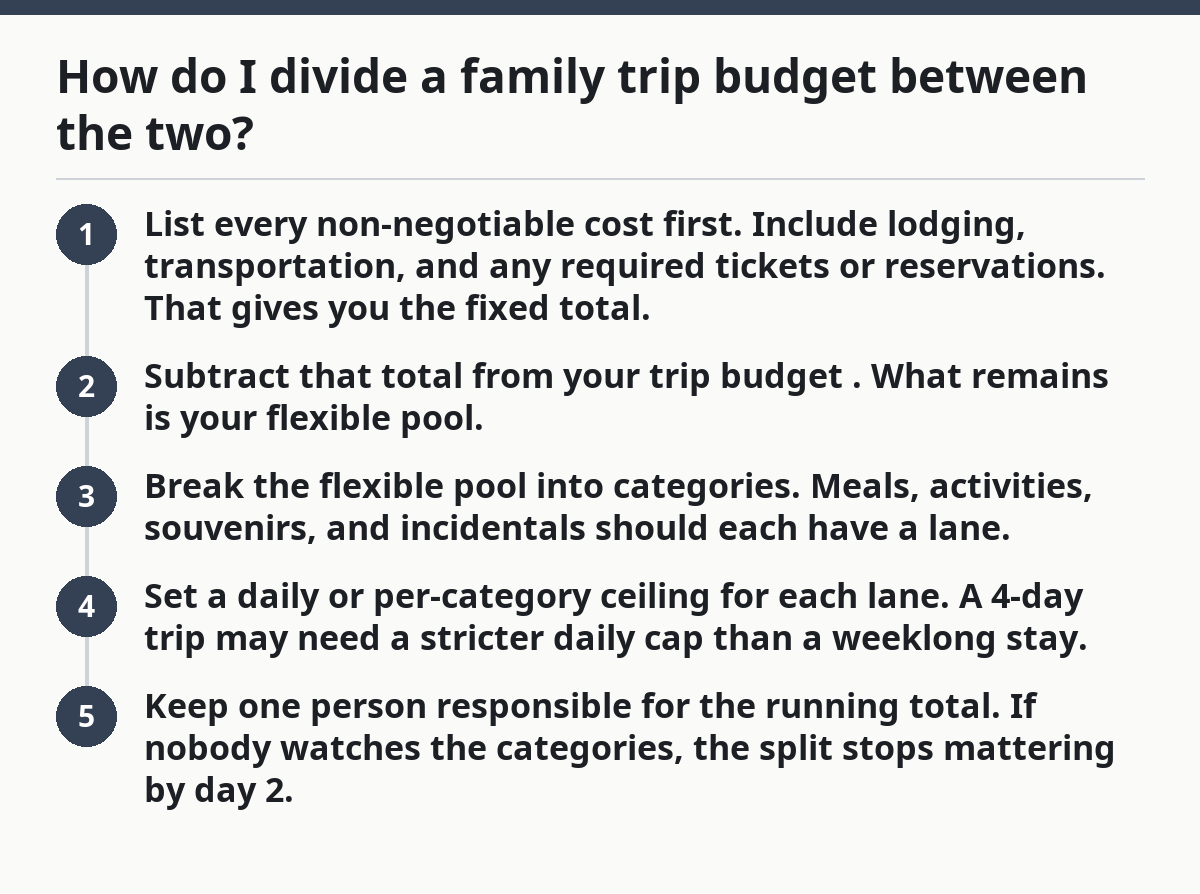
- List every non-negotiable cost first. Include lodging, transportation, and any required tickets or reservations. That gives you the fixed total.
- Subtract that total from your trip budget. What remains is your flexible pool.
- Break the flexible pool into categories. Meals, activities, souvenirs, and incidentals should each have a lane.
- Set a daily or per-category ceiling for each lane. A 4-day trip may need a stricter daily cap than a weeklong stay.
- Keep one person responsible for the running total. If nobody watches the categories, the split stops mattering by day 2.
A simple method is to treat fixed costs as untouchable and flexible spending as daily cash flow, with a budget review from a travel or financial professional if you want help stress-testing the plan. That means lodging and transport are protected, while meals and extras can be adjusted as the trip unfolds. It also makes it easier to see where the budget is getting tight before the last day.
Do not split everything evenly just because it feels neat. A beach trip with free walks and one big dinner has a different spending pattern from a city trip with paid transit and multiple admissions. The best split usually matches the trip shape, not a spreadsheet habit.
Family trip budget categories: what goes where?
The cleanest budget categories are lodging, transportation, activities, meals, souvenirs, and incidentals. Those six buckets cover almost every travel expense without turning the budget into a junk drawer.
Picture this: you’re filling in a planner and every expense starts to look alike. A snack at a rest stop, a lunch near a museum, and parking near the beach are all “small costs” until they hit the card. Categories keep each type of spending visible.
Use this structure:
- Lodging: fixed unless you still can change the room or dates
- Transportation: fixed for booked tickets, flexible for fuel, tolls, or rideshares
- Activities: fixed for prepaid tickets, flexible for optional add-ons
- Meals: mostly flexible unless breakfast or dinner is included
- Souvenirs: flexible and easy to cap
- Incidentals: the catchall for snacks, parking, laundry, tips, and small fees
The point of categories is control, not perfect accounting. If you know meals are running hot, you can slow down elsewhere. If souvenirs are getting heavy, you can cut them before they eat into dinner money. That is harder to do if everything sits in one line called “miscellaneous.”
A lot of generic advice misses this part: not every category should be treated the same way. Meals are usually flexible, but a prepaid breakfast package is not. Transportation can be partly fixed and partly flexible. Activities often split the same way. The category name does not matter as much as whether the amount can still move.
The guardrails that keep flexible spending from taking over
Guardrails work best when they are simple enough to remember at a table. If the rule is too clever, it gets ignored by lunch.
Picture this: you’re 3 days into the trip and everyone wants one more treat. Without guardrails, “just this once” becomes a pattern. With guardrails, you already know what the trip can absorb.
Set guardrails in three forms:
- Daily cap: a limit for each day on meals, snacks, and extras
- Category cap: a total for activities or souvenirs across the trip
- Decision rule: a yes-or-no trigger for purchases above a set amount
A decision rule can be plain language: if an activity costs more than the category balance left, it waits. If a meal choice would push the day over the cap, pick a cheaper place. That sounds basic, but it keeps one splurge from consuming the last two days of the trip.
This is also where people get tripped up. They set a flexible budget, then treat it like a soft suggestion. The problem is that flexible does not mean unlimited. It means the money can move within a boundary. The boundary is what keeps the fixed costs safe.
If children are part of the trip, the guardrail should be visible to them in a simple form. You do not need a lecture. A plain “we have one souvenir stop” or “we’re choosing one paid activity today” keeps expectations grounded without turning the trip into a spreadsheet contest.
Common mistakes that break the split
The biggest mistakes are calling everything fixed, calling everything flexible, or skipping a category for small costs. Each one hides spending until the budget is already off course.
Picture this: you think the trip is covered because the major bookings are done, then the card starts picking up meals, parking, and extra tickets one by one. The money was never missing; it was just sitting in the wrong bucket.
Watch for these errors:
- Putting too much in fixed costs: this starves meals and activities later.
- Leaving transportation half-labeled: fuel, tolls, and airport transfers often get forgotten.
- Forgetting incidentals: laundry, snacks, and tips can stack up across several days.
- Treating souvenirs as harmless: small purchases become a real line item fast.
- Using one pool for everything: this makes it hard to see what is left.
The fix is boring but effective. List the trip in categories before booking, tag each item as fixed or flexible, and keep the flexible bucket visible during the trip. If a line item does not fit neatly, ask one question: can I change this after I book it without losing money? If yes, it is flexible. If not, it is fixed.
The truth is, most budget trouble comes from vague labels, not from one giant mistake. A trip can survive a pricey dinner. It struggles when several “little” costs were never assigned a home.
A simple way to review the split before you book
The last check is to compare your fixed total to the room left for daily life. If the fixed share is too large, the trip may look affordable on paper and feel tight on the ground.
Picture this: you are about to click book, and the numbers are almost right but not quite. This is the moment to pause for 5 minutes, not 5 days. The goal is not to rebuild the plan. The goal is to see whether the budget has enough air left in it.
Ask four questions:
- Do the fixed costs leave enough money for meals, activities, and incidentals?
- Did I count transportation in full, including fees or local travel?
- Is there a clear cap on souvenirs and extras?
- Would one unexpected meal force me to cut something important?
If the answer to any of those feels shaky, move money from flexible categories before you book more fixed items. That adjustment is easier now than after a nonrefundable charge lands. A family trip budget works best when the fixed part is secure and the flexible part still has room to breathe.
This split is not about being strict for its own sake. It is about spending on purpose. Fixed costs hold the trip together. Flexible spending lets the trip feel like a trip instead of a list of receipts.
Key takeaways
- Put committed bookings in one bucket and everyday travel costs in another.
- Protect lodging and transportation first, then set limits for meals, activities, souvenirs, and incidentals.
- Treat flexible money as capped money, not spare cash with no rules.
- Use simple daily or category limits so one splurge does not spill into the rest of the trip.
- The best split matches the actual trip shape, not a neat but unrealistic formula.
What costs should be fixed in a family vacation budget?
Fixed costs are the expenses you have already committed to or cannot change without losing money. That usually includes lodging, transportation bookings, and prepaid tickets or reservations. If changing the amount would mean rebooking, canceling, or paying again, treat it as fixed.
How much should stay flexible in a trip budget?
Flexible spending should cover the parts of the trip that change on the road, like meals, snacks, souvenirs, incidentals, and optional activities. The exact amount depends on the trip shape, but it should be enough to handle daily choices without touching the fixed bucket. If it has no cap, it is not really flexible.
What should go into a family travel spending category?
A travel spending category should hold the costs you expect to control during the trip, not the ones you already locked in. Meals, souvenirs, parking, snacks, laundry, tips, and last-minute extras belong there. The category should be specific enough that you can see when one kind of spending is taking over.
Drafted with AI; not yet reviewed by a person.
