Last updated: November 20, 2026
Key Takeaways
- Pick the overnight stop first, then build the route around it.
- Time the stop for the day’s drive, not just the lowest room rate.
- Build in mileage breaks before anyone melts down.
- One overnight stop can cut costs when it replaces another hotel night, trims meals, and keeps the route on course.
A How to Plan a Budget Family Road Trip With One Overnight Stop works best when you plan around a midpoint hotel, fuel breaks, and one long driving day instead of guessing as you go.
A budget family road trip with one overnight stop often costs less when you book the overnight based on driving time, not just miles.
The steps below settle where to stop, when to leave, and how to keep lodging, gas, and food from drifting upward.
Start with the one question that drives the whole trip
Picture this: you’re trying to get kids, bags, snacks, and a full tank out the door without turning the first day into a drain on the budget. The answer is to pick your overnight stop first, then build the rest of the route around it. That choice can shape your hotel rate, your meal stops, and how tired everyone gets at 8 p.m.
Here’s the catch: the cheapest-looking route is not always the cheapest trip. A long detour to a lower-rate hotel can burn extra gas and add an hour or two on the road. A stop near interstate exits, gas stations, or a cluster of midpoint hotels usually keeps the trip simpler and can cut the odds of paying for a late dinner because everyone is exhausted.
A smart first pass looks like this:
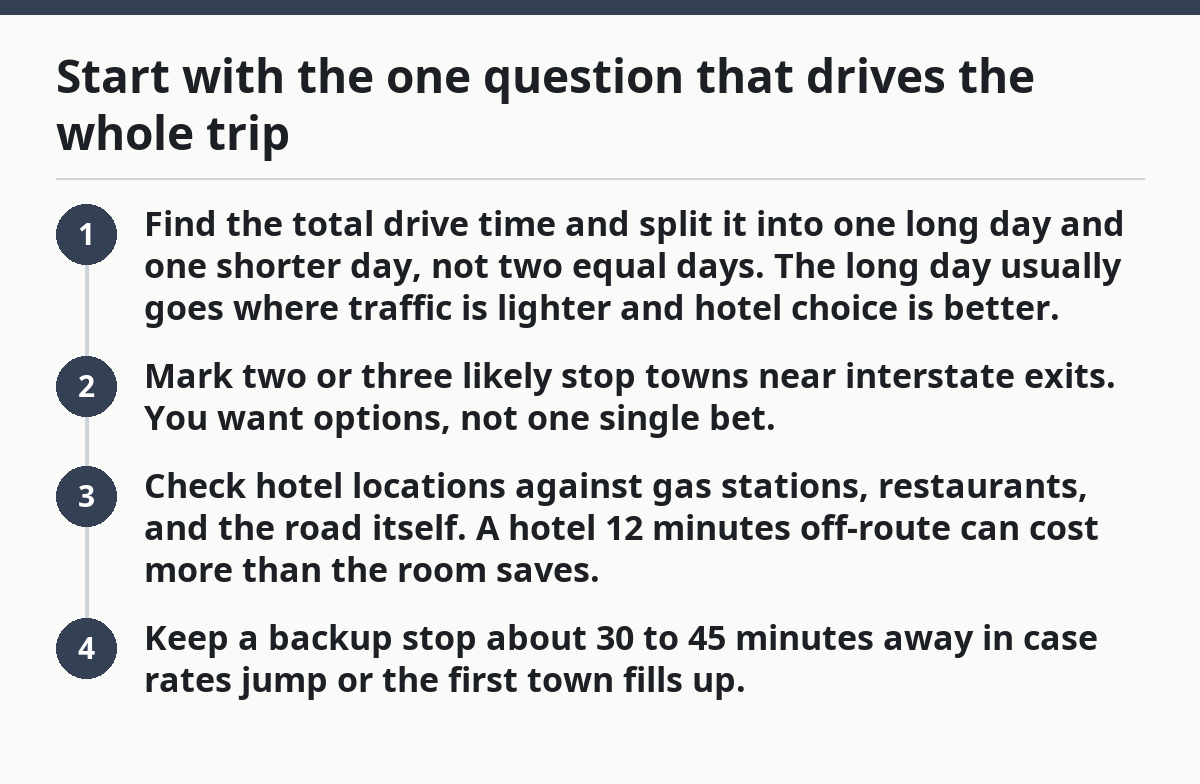
- Find the total drive time and split it into one long day and one shorter day, not two equal days. The long day usually goes where traffic is lighter and hotel choice is better.
- Mark two or three likely stop towns near interstate exits. You want options, not one single bet.
- Check hotel locations against gas stations, restaurants, and the road itself. A hotel 12 minutes off-route can cost more than the room saves.
- Keep a backup stop about 30 to 45 minutes away in case rates jump or the first town fills up.
The truth is, one overnight stop works best when it reduces decisions. That means fewer exits to debate, fewer meal stops to improvise, and less chance of dragging the day out with a late arrival.
How do you choose where to stop on a family road trip?
You choose the stop by timing the day, not by chasing the lowest room rate alone. For a budget family road trip with one overnight stop, the stop is often a practical town near an interstate exit that lands you in a hotel before everyone gets overtired.
A good midpoint stop does three jobs at once. It gives you enough road behind you to make the first day feel productive, enough daylight left to check in without stress, and enough nearby services that you are not paying extra for convenience every time someone needs a bathroom or a snack.
Look for these signs:
- Interstate access within a few minutes, not a maze of surface streets.
- Midpoint hotels with free parking, because parking fees can quietly wreck a budget.
- Gas stations near the exit, so you can fill up before cheaper stations disappear.
- Restaurants or grocery stores close by, so dinner does not turn into a drive across town.
- State parks or simple public spaces if you want a low-cost stretch break before check-in.
Avoid stop towns that look cheap on the map but sit 20 to 30 minutes off the route. That extra drive costs fuel, time, and patience. It also makes it harder to leave early the next morning, which is where the budget usually leaks: breakfast, coffee, and one more “quick” store run.
A simple rule helps: if the stop adds more than 15 minutes each way from the main road, keep looking.
Plan the driving day around mileage breaks, not guesswork
Picture this: you have 6 hours of driving ahead, one child who gets restless after lunch, and another who falls apart if the day runs too late. The answer is to build in mileage breaks before anyone melts down. That keeps the trip from turning into a chain of expensive emergency stops.
A family car day works better when the breaks are tied to distance and time. Many drivers do well with a stop every 2 to 3 hours, but the exact rhythm depends on your kids, your route, and the weather. You do not need a perfect chart. You need a plan that tells you when to stop before the car becomes a pressure cooker.
Use this simple procedure:
- Estimate the day’s drive in hours, then cut it into blocks of about 2 to 3 hours. Those blocks become your rest area targets.
- Pick the first stop where a rest area, gas station, or highway service exit appears before the tank gets low and before the back seat starts to fray.
- Use the next break for food, not just fuel. A 20-minute lunch stop often does more for mood than an extra sightseeing stop.
- Set the arrival goal at the overnight stop early enough to check in, unload, and eat without rushing dinner past bedtime.
- Leave one buffer stop in the plan. If traffic slows or one child needs a longer stretch, the buffer keeps the whole day from collapsing.
Because the day runs better with a clear order, you do not need fancy gear. A paper map, a phone, and a note with exit numbers are enough. What matters is the sequence: drive, break, fuel, eat, check in. That sequence keeps the day predictable.
How much does one overnight stop save?
One overnight stop can save money when it replaces a second hotel night, reduces restaurant meals, and keeps the route from drifting off course. The catch is that savings only show up if the stop sits close to the route and does not force extra miles.
The biggest cost trade-off is usually this: a slightly better-located hotel may cost more than a distant bargain, but the closer hotel can save on gas, missed meal timing, and the tired-child tax that comes with a long detour. That is why the cheapest room is not always the cheapest night.
Use this checklist before booking:
- Compare rooms in the stop town and in the next town along the route.
- Check whether parking is free.
- Look at breakfast, because a hotel breakfast can replace one paid meal.
- See how far the hotel sits from the interstate exit.
- Think about late arrival. A room with simple access is worth more than one that saves a few dollars but costs 25 minutes of hassle.
A one-stop plan also helps because it keeps the trip from fragmenting. Two overnight stops usually mean two check-ins, two next-day departures, and two chances for a meal budget to run higher than planned. One stop is easier to control.
If you want a deeper framework for the rest of the trip budget, the budget family trip planning by trip format and transport choice hub gives the larger picture. This page stays focused on the road-trip version.
Book the hotel with the route, not the room photo
Picture this: you spot a low rate, but the hotel is tucked deep in a city grid and check-in lands on the far side of rush-hour traffic. The answer is to judge the hotel by access and timing first. That matters more than a polished lobby or a wide-angle photo.
A budget hotel for a one-night road stop should be easy to reach from the road and easy to leave before sunrise. A room on the wrong side of a busy town can turn a cheap night into an expensive one, especially if you arrive hungry or leave during commuter traffic.
Choose based on these practical details:
- Exit distance — aim for a hotel close to the interstate so you do not spend the last hour hunting streets.
- Check-in time — make sure it matches your arrival window, especially if kids need dinner and downtime.
- Room layout — one room may save money, but an awkward setup can be rough if one child sleeps lightly.
- Breakfast timing — a hotel with early breakfast helps you start the next day without buying food twice.
- Cancellation terms — flexible booking matters if weather or traffic changes the plan.
Two common mistakes cost real money. Booking too early on a high-demand date can lock you into a bad location, and booking too late can leave you with whatever is left near the exit. A fair middle ground is to book once your route is fairly set, then keep the stop town flexible enough to shift if needed.
Build meals around the drive, not around cravings
Meals cost less when you plan them around the route and the clock. A road trip food budget grows fast when every stop becomes a restaurant stop, so the better plan is to carry snacks, use one purchased meal when it makes sense, and avoid ordering food because everyone is cranky.
A good day usually has three food layers. First comes packed snacks in the car. Second comes a planned meal stop tied to the long break. Third comes a simple evening meal near the hotel or a quick grocery run if the room has a fridge or microwave.
Keep this in mind:
- Rest areas are fine for stretch breaks, but they are not a food plan.
- Gas stations work for emergency food and drinks, not for every meal.
- State parks can be a cheap place for a picnic if the route passes one and the weather cooperates.
- A grocery stop near the hotel often costs less than a sit-down dinner for a tired crew.
The mistake that hurts budgets most is waiting until the car is already hot, loud, and hungry. Then any nearby food looks reasonable, even if it is overpriced. A sandwich, fruit, crackers, and water in the car can stop that spiral.
If you want a rule of thumb, plan one real meal stop for the long driving day and keep the others simple. That alone can keep the day from becoming a string of small charges.
Keep fatigue low without paying for extra miles
Fatigue costs money because tired people make expensive choices. They take the wrong exit, stop too late, buy food out of frustration, or book a room farther away because they are too worn out to keep searching.
The fix is to treat energy like fuel. Leave early enough to avoid a rushed first hour, schedule one strong break before the afternoon slump, and aim to reach the hotel before the last bits of energy are gone. A 30-minute buffer before check-in can save more than a last-minute detour ever will.
Watch for these warning signs:
- Kids get quiet in a bad way, not a resting way.
- Adults start skipping bathroom stops to “make time.”
- The route has more than one long stretch with no services.
- Dinner is getting pushed later and later.
If that starts happening, shorten the day, not the plan. Stop earlier, eat sooner, and protect the overnight. A budget road trip is not won by squeezing every last mile into one day. It is won by avoiding the expensive mistakes that come from exhaustion.
What mistakes usually blow the budget?
The biggest budget mistakes are choosing a stop town too far off route, booking a hotel without checking exit access, and pretending the family can drive until night without extra breaks. Those errors cost money in fuel, food, and late-arrival stress.
A few smaller traps matter too. Some travelers overpack the day with “free” sights that add mileage. Others skip a planned meal stop and then buy expensive convenience food because everyone is too hungry to wait. Another common miss is underestimating how much a bad arrival time changes the whole next day.
Fixes are simple, but they have to happen early:
- Keep the overnight close to the route.
- Leave room for a 20- to 30-minute stretch stop.
- Buy groceries before the hotel if dinner would otherwise turn into takeout.
- Plan the next morning as a clean exit, not a lazy start.
The short version is this: budget road trips punish improvisation. A one-night stop works best when the day has a shape, the hotel is easy to reach, and the food plan is boring on purpose.
How do you choose where to stop on a family road trip?
Choose a stop that sits near the route, not miles away from it. The best town is usually by an interstate exit with nearby gas stations, easy hotel access, and enough food choices to keep dinner simple. If the stop adds a long detour or a messy city drive, keep looking.
How do you reduce hotel costs on a road trip with kids?
Book a hotel close to the highway, check parking and breakfast first, and avoid paying for extra distance just to save a few dollars on the room. One night with free breakfast and easy access often beats a cheaper room across town. If you can, keep the check-in time aligned with your arrival so you do not waste money on late meals.
How do you plan driving days around children’s energy levels?
Plan the day in blocks of about 2 to 3 hours and place breaks before kids hit the wall. A long, late drive usually costs more in snacks, stress, and poor choices than an earlier hotel stop does. The goal is a steady day, not a heroic one.
Drafted with AI; not yet reviewed by a person.