Last updated: November 19, 2026
Quick answer: For What to Pack for a Family Trip When You Want to Skip Convenience Purchases, pack five core categories first: hydration, food, power, health, and clothing. That means water bottles, snacks, charger cables, a first aid kit, weather layers, and a few reusable containers before anything else.
Key Takeaways
- Build the family travel packing list around repeat-use basics, not outfits alone.
- Bring the hardest-to-replace items from home so you avoid last-minute buys.
- Pack the small essentials that stop one problem from triggering more store stops.
- For kids, use one outfit a day plus one spare set unless the trip clearly needs more.
Pack the family travel packing list around the things that stop you from buying overpriced basics on the road: water bottles, snacks, charger cables, a first aid kit, packing cubes, laundry supplies, weather layers, and reusable containers. If those are in the bags, the trip gets cheaper fast because you are not scrambling for small replacements at a gas station, airport shop, or resort store.
The family travel packing list that saves money
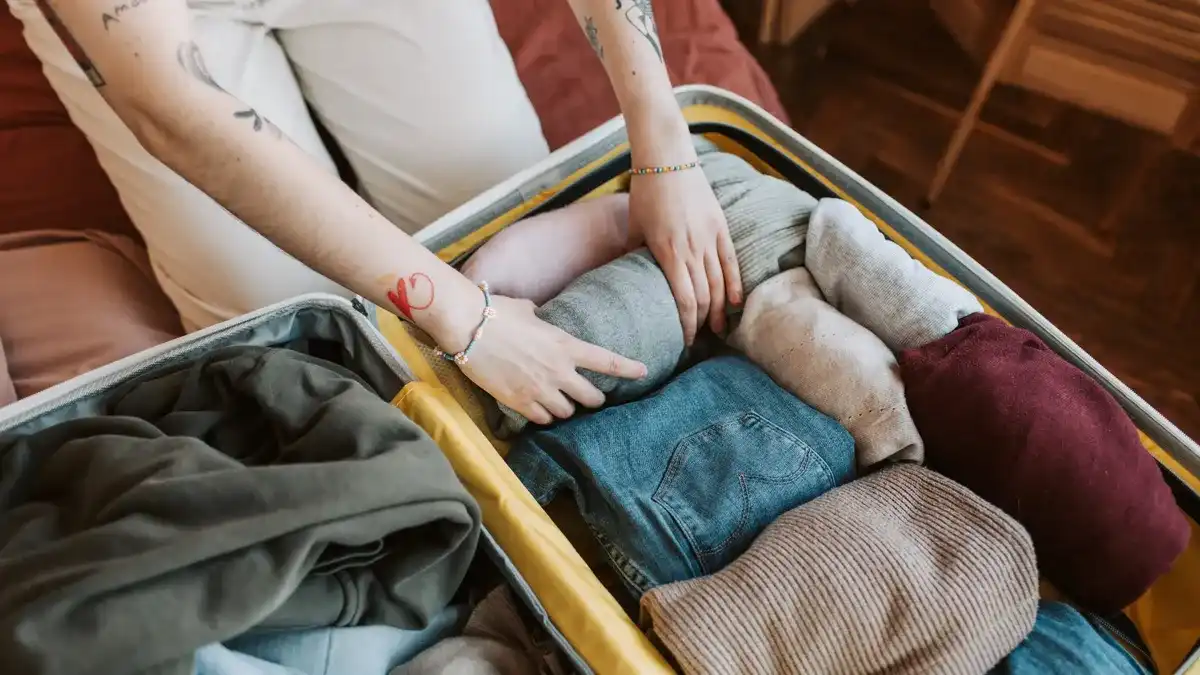
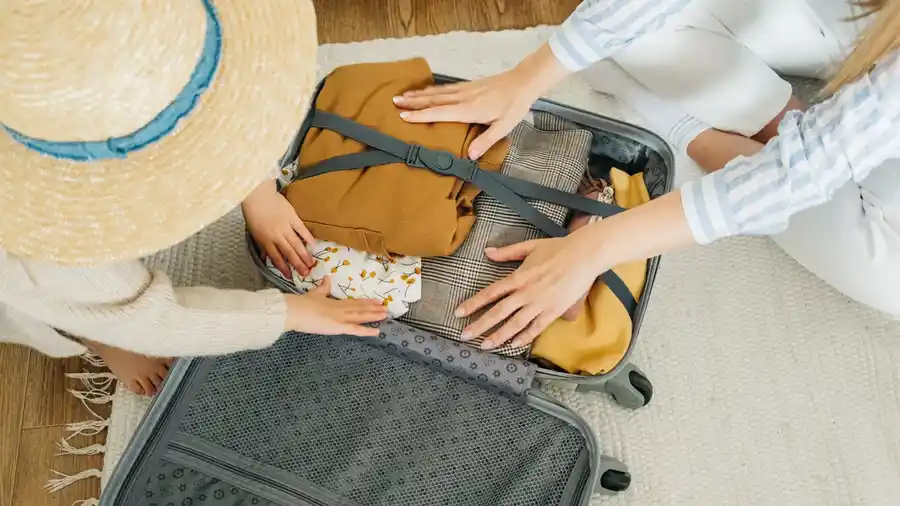
The family travel packing list that saves money is the one built around repeat-use items, not outfits alone. It should cover the daily stuff that disappears fastest on a trip: something to drink from, something to eat, something to charge with, something to clean up with, and something to handle weather or spills.
A practical version starts with the basics that prevent convenience spending:
- Refillable water bottles for each person
- Snack containers or zip-top bags
- Charger cables and a power bank
- A compact first aid kit
- Packing cubes or similar organizers
- Laundry supplies for 1 to 3 quick washes
- Lightweight layers for heat, rain, or cold
- Reusable food containers or a fold-flat container
- Tissues, wipes, hand sanitizer, and a few trash bags
The key idea is simple: pack for the first 24 hours, then pack to avoid the purchases that are most likely to happen after that. Most families do not need 8 duplicates of everything. They need one reliable set of items that gets used every day. A spare charger cable costs less in money and stress than buying one in a hotel gift shop late at night.
A few items deserve a place even if they feel minor. A small pack of zip-top bags can rescue wet swimsuits, half-eaten crackers, and toiletries. A small roll of pain relief bandages and antiseptic wipes in the first aid kit can prevent a run to the store for a tiny cut. A sweater or light shell can keep you from paying for a souvenir hoodie when the air conditioning is too strong or the weather turns.
This is not the packing list for a luxury resort with shops around every corner. It is the right list for a road trip, a theme park weekend, a city stay, or any family trip where replacing little things gets annoying and expensive. If the trip is short and you truly have access to everything on site, you can pack lighter. If not, pack with the assumption that the nearest store may be expensive or inconvenient.
What should go in your bags first?
Pack the items that are hardest to replace well once you leave home. That means medications, chargers, water bottles, snacks, and a first aid kit should go in the bags before extra clothes or toys.
Use this order so the essentials do not get buried:
- Put daily medications, inhalers, and any required medical supplies in a small pouch at the top of one carry-on or day bag. That keeps them reachable during a 2-hour drive or a 6-hour flight delay.
- Add charger cables, a wall plug, and one power bank in the same area. A phone with a dead battery turns into multiple purchases: a cable, an adapter, or a charging block.
- Pack each person’s refillable water bottle empty. Fill them after security or at the first stop so you avoid buying bottled drinks every time someone says they are thirsty.
- Divide snacks into portions for the car, plane, or hotel room. A family of four can burn through a bag of chips in minutes; pre-portioned snacks stretch farther.
- Place a compact first aid kit where one adult can grab it without unpacking everything. Bandages, antiseptic wipes, allergy medication, and pain relief items are enough for many minor problems.
- Pack one set of laundry supplies if the trip is longer than 3 days. A travel-size detergent sheet, stain remover pen, or sink wash bar can cut down on extra outfits.
- Add weather layers last: a light rain shell, cardigan, hoodie, or thin gloves depending on the destination. These are the items people buy reluctantly at the destination because they packed for the forecast, not the real feel of the trip.
The goal is not to carry everything in duplicate. It is to keep the items that create the most unplanned spending close at hand. A family bag with good access beats a larger suitcase packed with useful things you cannot reach.
One honest limitation: this order works best when one adult controls the essentials. If every child packs their own bag with snacks and chargers scattered in different places, the convenience spending problem returns fast.
What to pack for a family trip when you want to skip convenience purchases
Pack the things that stop one small emergency from becoming a chain of store stops. The most useful money-saving items are the ones that solve thirst, hunger, battery drain, spills, and minor injuries without a trip to the lobby shop or corner market.
The consumables and near-consumables
These get used up, so bring enough to avoid buying them mid-trip:
- Snacks that travel well: granola bars, crackers, fruit leathers, nuts if safe for your group, shelf-stable fruit pouches, and pretzels
- Water bottles for every traveler
- A few resealable bags for leftovers and open snacks
- One compact pack of tissues
- Hand wipes or sanitizer
- A small roll of trash bags or dog-waste bags for dirty clothes and trash
- Over-the-counter basics you already use at home, stored in original packaging
The snack choice matters more than people think. A bag of sticky sweets can create a mess in the car, while dry snacks can last 2 to 4 hours between stops without turning the back seat into a cleanup project. If a child has known dietary needs, pack the exact brand or safe alternative they already eat. That is cheaper than buying a substitute you may end up discarding.
The support items
These do not disappear, but they prevent extra spending:
- Charger cables for each device
- One multi-port wall charger if multiple phones, tablets, or headphones need power
- A power bank
- Packing cubes to keep each person’s clothes separate
- Reusable containers for snacks, leftovers, or wet items
- A small laundry kit: detergent sheets, stain remover, and a sink stopper if you plan to wash in the room
Packing cubes are worth carrying when you want less chaos and fewer repeat purchases. A cube for each child makes it obvious what is missing, what is dirty, and what can be reused. That reduces the “we need another shirt” panic that often leads to impulse buys.
The comfort items that prevent urgent purchases
These are the quiet money savers:
- A hoodie or thin sweater per person for cold planes, buses, or restaurants
- One compact rain layer if showers are possible
- Sunglasses and hats in sunny places
- A small comfort item for younger children, if that reduces the chance of buying a substitute toy or snack
The mistake is overpacking comfort items and underpacking practical ones. Three extra outfits do not help when the family needs a charging cable or a second bottle opener. A useful rule: every bag should contain one answer to thirst, hunger, battery drain, a mess, and a sudden weather change.
How do I pack for kids without overpacking?
Pack kids with one full outfit per day plus one backup set, then stop unless the trip includes a strong reason to add more. That keeps the bag light and still covers spills, weather changes, and the occasional lost sock.
A simple system works best:
- One shirt, one bottom, one underwear set, and one pair of socks for each day
- One extra full outfit for accidents or bad weather
- One layer for cool indoor spaces
- One sleep set
- One pair of shoes that can handle the main activities
For toddlers and younger children, include a few more practical backups rather than a larger wardrobe: an extra bib, a spare rash guard, and a second reusable snack container can matter more than another dress or pair of shorts. For older kids, let them choose between 2 approved tops or 2 approved bottoms before the trip. That gives them some control without filling the suitcase with “just in case” clothes.
The most common overpacking mistake is packing for a hypothetical version of the trip. A beach weekend does not need 6 pairs of shoes. A city stay does not need a week’s worth of brand-new outfits. If laundry is possible during the trip, plan on washing 1 load instead of carrying 5 extra days of clothes. If laundry is not possible, keep the clothing choices neutral and mixable so each piece can do more than one job.
Use packing cubes by person or by category. A cube for tops, a cube for bottoms, and a small bag for underwear keeps the search time down when a child needs a clean shirt in 30 seconds. It also makes it easier to spot what is missing before you leave the house.
The trade-off is clear: lighter packing means a little more planning at home. That is still cheaper than buying an emergency T-shirt in a tourist area because the clean one is buried under three unused outfits.
Laundry, weather, and food items that keep spending down
Pack laundry supplies, weather layers, and reusable food containers because they extend the life of what you already brought. Those three categories are the easiest way to avoid replacement purchases after day 2.
A tiny laundry kit can be enough for most trips:
- 2 to 4 detergent sheets or a small travel bottle of detergent
- A stain remover pen
- A sink stopper or small plug
- A clothesline or a few reusable clips
- A zip bag for dirty clothes
That setup lets you rinse a shirt after a spill or hand-wash underwear without hunting for a laundromat. It is not a full laundry solution, and it will not replace a proper wash on a long trip, but it can get you through a family weekend and reduce the need to buy extra clothes.
Weather layers should match the least pleasant version of the forecast, not the nicest. A sunny forecast can still mean cold restaurants, windy ferry rides, or rain after sunset. Pack a light rain shell, one warmer layer, and one compact hat or sun cover if the climate calls for it. A $20 souvenir sweatshirt is much less tempting when every child already has a layer they like.
Reusable containers do more than hold leftovers. They protect snacks from getting crushed in a backpack, keep sticky food from leaking in a cooler, and let you split one large purchase into smaller portions. A fold-flat silicone container or a few sturdy plastic containers can reduce the need for single-use wrap, hotel cups, and emergency takeout boxes. If your family prefers buying food on the go, containers are the difference between one planned purchase and several wasted ones.
Because these items work together, they buy time. Laundry buys another wear. A shell buys another dry hour. A container buys another snack stop without mess. That is what keeps convenience spending under control.
The packing mistakes that cost the most
The biggest mistake is packing for comfort at home instead of friction on the trip. That costs money because the family still needs to buy the missing items once a problem appears.
The most expensive mistakes are usually these:
- Forgetting water bottles and buying drinks one at a time
- Packing snacks only for the first day
- Leaving charger cables in a drawer at home
- Bringing outfits without matching layers
- Skipping the first aid kit because “nothing ever happens”
- Packing too many clothes and not enough reusable containers or laundry supplies
Each mistake creates a predictable cost. No water bottle means repeated drink purchases. No charger means a frantic trip to the nearest store. No first aid kit means paying for a tiny item in a larger, overpriced checkout lane. No laundry supplies means carrying more clothes than you need or buying extras after a spill.
There is also a subtler mistake: packing one adult’s needs and forgetting the children’s. Kids burn through snacks, wipe their hands on sleeves, spill drinks, and get cold in air conditioning faster than adults expect. A family travel packing list works only if it reflects the pace of the youngest traveler.
The best fix is to keep a reusable master list on your phone and sort it into 5 buckets: hydration, food, power, health, and clothing. That keeps the list from becoming a giant pile of random items. It also helps on repeat trips because you can adjust by climate and trip length instead of starting from zero every time.
For a broader planning framework, this article fits into the larger budget family travel planning by family needs and trip logistics hub, which can help connect packing with the rest of the trip budget.
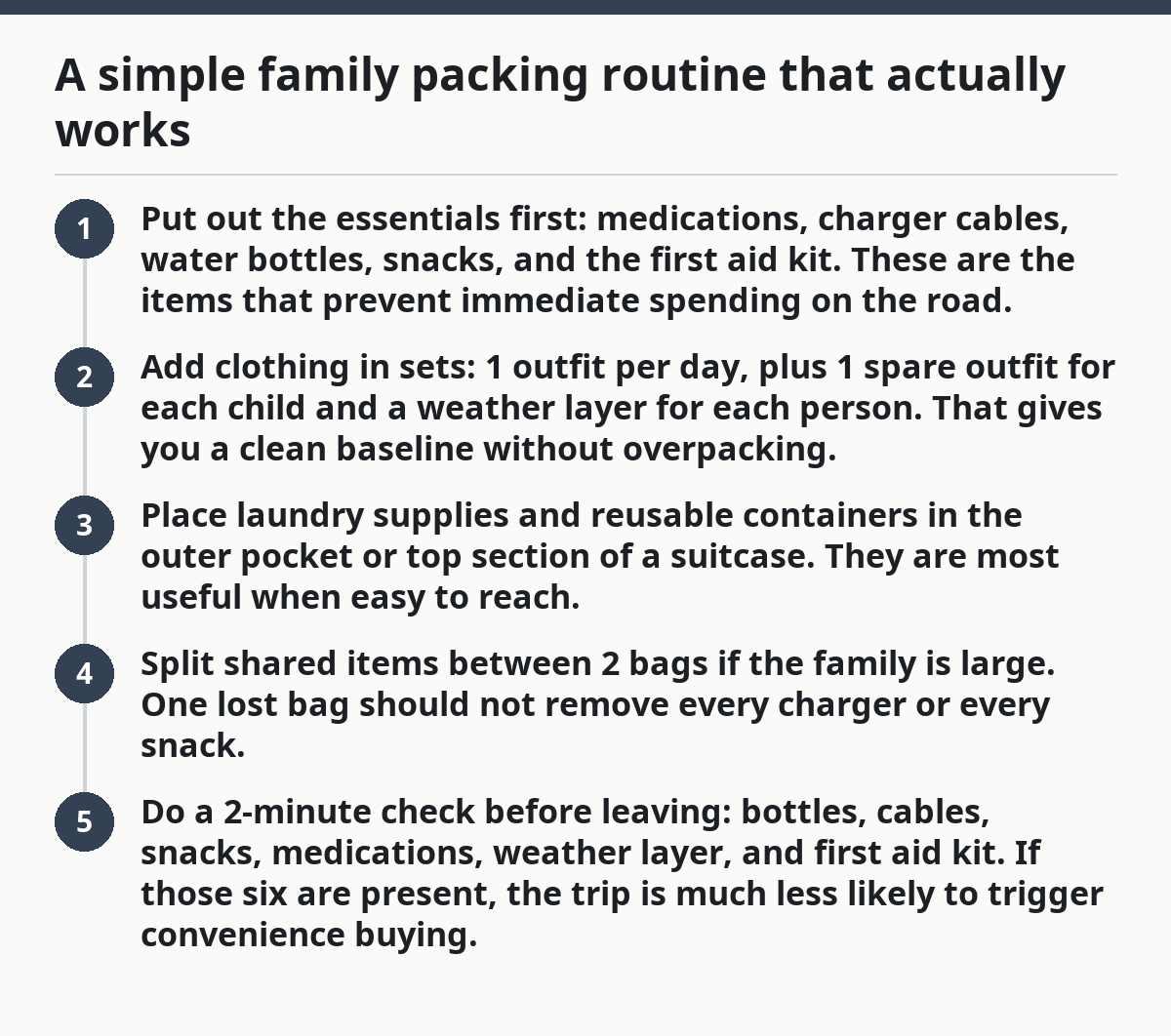
A simple family packing routine that actually works
Therefore, pack by function, then check the bags by category. That routine is faster than laying every item on the bed and hoping nothing gets missed.
- Put out the essentials first: medications, charger cables, water bottles, snacks, and the first aid kit. These are the items that prevent immediate spending on the road.
- Add clothing in sets: 1 outfit per day, plus 1 spare outfit for each child and a weather layer for each person. That gives you a clean baseline without overpacking.
- Place laundry supplies and reusable containers in the outer pocket or top section of a suitcase. They are most useful when easy to reach.
- Split shared items between 2 bags if the family is large. One lost bag should not remove every charger or every snack.
- Do a 2-minute check before leaving: bottles, cables, snacks, medications, weather layer, and first aid kit. If those six are present, the trip is much less likely to trigger convenience buying.
This method is not glamorous, but it is reliable. The result should be obvious when you leave: fewer “we have to stop for that” moments, less clutter in the car or room, and more of the trip money left for the things you actually planned to do.
What should families pack to avoid buying things on the road?
Families should pack the things that solve the most common small emergencies: water bottles, snacks, charger cables, a first aid kit, weather layers, and a few reusable containers. Those items cover hunger, thirst, battery drain, spills, and minor injuries, which are the reasons most convenience purchases happen.
What are the most useful money-saving packing items?
The most useful money-saving packing items are reusable water bottles, packing cubes, charger cables, a power bank, a first aid kit, and laundry supplies. They help families avoid repeat buys, keep bags organized, and stretch the trip budget.
Sources
- American Academy of Pediatrics: Travel Safety Tips
- CDC: Travelers’ Health Packing List
Drafted with AI; not yet reviewed by a person.