
Last updated: November 19, 2026
Quick Answer: The cheapest family stay is often the one with the right room shape, kitchen access, and fee structure, not the lowest sticker price. A family hotel stay can look cheap on the search results page and still cost more after a second room, parking, breakfast, or a resort fee. The same is true for vacation rentals, where a lower nightly rate can hide cleaning charges or a long commute to groceries. In other words, how to save money on family hotels and vacation rentals starts with the total stay cost, not the headline rate.
Start by pricing the whole stay, not the nightly rate
The first way to save money on family hotels and vacation rentals is to compare the full stay cost for the exact nights, taxes included. You need your dates, the number of adults and children, and a rough idea of how much space you actually need before you search. A room that fits four on paper can become expensive if it forces you into a second room or extra meals out.
Build your comparison around the same stay length, usually 2, 3, or 5 nights, and the same occupancy. Then add the costs that change the true price: taxes, resort fees, parking, breakfast, kitchen supplies, cleaning fees, and any charge for more than two guests. If a hotel listing has a $40 nightly rate but a resort fee and paid parking, it may no longer beat a vacation rental with one cleaning fee and a kitchen.
A useful rule is to compare at least three options in the same neighborhood: one standard hotel room, one suite room, and one vacation rental with a kitchen or kitchenette. That gives you a real baseline instead of comparing a bargain room to a premium house.
Which family room setup actually saves the most?

The room layout saves more money than the brand name. For families, a suite room, connecting rooms, or a one-bedroom vacation rental often costs less overall than forcing everyone into a single standard room.
Here is the order I would check:
- Search for a suite room with a sofa bed or separate sleeping area. The result you want is one reservation that gives children a door, wall, or at least a distinct living area.
- Compare that with two standard rooms. If the hotel charges by room rather than by person, two rooms may cost much more than a suite, but sometimes a basic second room is still cheaper than a larger premium suite.
- Check for connecting rooms. If one room has two queen beds and the other has a king, this can be a strong value when privacy matters more than one big common space.
- Look at a vacation rental with at least 2 bedrooms if the group needs real separation. A 1-bedroom rental with a sleeper sofa can work for small children, but it is a poor fit for older kids or different bedtimes.
- Compare the total against a hotel room with a kitchenette. In some cities, a compact kitchen setup beats a larger rental once cleaning fees are added.
The money-saving part is simple: pay for the sleeping setup you need, not the one the booking site pushes first. A standard double-queen hotel room is often a low-cost hotel option for a small family. A suite room becomes the better deal when it prevents buying two rooms or replacing breakfast and late-night snacks with restaurant food.
One honest trade-off: suites and vacation rentals can save money on food and space, but they are not always the cheapest if you are staying only one night or if the family will be out all day.
How kitchen access cuts the daily bill
Kitchen access cuts family travel costs because breakfast, snacks, and one simple dinner are the meals most likely to get overpriced on the road. A kitchenette with a microwave, mini-fridge, sink, and a few dishes can change the whole budget for a 3-night stay.
This is where vacation rentals and certain suite hotels pull ahead. A rental with a full kitchen can let you buy groceries once and make oatmeal, sandwiches, fruit, pasta, or cereal instead of paying for every meal outside. A hotel kitchenette is more limited, but even a microwave and fridge can save money on milk, leftovers, yogurt, and kid snacks.
Use the kitchen for the meals that are easiest to control:
- breakfast
- one lunch or picnic
- late-night snacks
- drinks that would otherwise come from a lobby store
That is enough to reduce food spending without turning the trip into a cooking trip. A family that plans to eat every dinner out may not save much from a kitchen. A family that uses the kitchen for breakfast and one backup meal usually sees the clearest benefit.
The drawback is time. Grocery shopping, cleanup, and meal prep can take away from vacation time. That trade-off matters most on a 1- or 2-night stay, where the kitchen may not pay for itself. It also matters if the rental does not include the basics you expect, such as pots, plates, or a coffee maker. Read the listing carefully, because “kitchen” can mean anything from a full range to a microwave tucked beside a sink.
How do resort fees and other hotel charges change the real price?

Resort fees can erase the savings from a cheap hotel rate, so check the fee line before booking. A room that looks inexpensive at first can cost much more once mandatory add-ons appear at checkout.
The usual extra charges to watch are:
- resort fees
- parking
- breakfast
- rollaway beds
- extra-person charges
- Wi-Fi or amenity charges in some properties
A family hotel stay is especially vulnerable to these add-ons because the room may already be near capacity. If you need valet parking, a second bed, or on-site breakfast because the kids are tired, the cheap-looking room stops being cheap.
To avoid surprises, open the final booking page before paying and look for the total price, not just the nightly rate. If the site shows a “resort fee” separately, treat it as part of the room price. If parking is required and the hotel sits in a downtown or beach zone, assume that fee belongs in the comparison even if it is not prepaid.
Vacation rentals have their own version of this problem. Cleaning fees and service charges can make a short stay awkwardly expensive. The shorter the stay, the more those one-time fees matter. A 5-night rental often absorbs a cleaning fee better than a 1-night stay.
For a solid outside reference on hotel fee transparency, the U.S. Federal Trade Commission has guidance on how sellers present prices online, and the Consumer Financial Protection Bureau explains why the total cost matters more than the headline price. I would use those as a reminder to compare the full amount due, not the teaser rate. See the FTC’s guidance on business pricing claims and the CFPB’s information on understanding the total cost of a loan for the broader principle of looking past the headline number.
Which booking channel gives families the best price?
The booking channel matters because different sellers expose different discounts, cancellation terms, and fee structures. The cheapest option is not always the hotel’s own site or the biggest rental platform.
Start with three places: the hotel’s direct website, a major online travel agency, and the vacation rental platform or manager’s direct site if one exists. Then compare the same room type, same cancellation policy, same occupancy, and same dates. A hotel may offer a package rate with parking or breakfast included. A rental manager may lower the price on a direct booking but add a stricter cancellation policy. The only useful comparison is the final total under similar rules.
Families should pay special attention to room occupancy rules. A site that prices by room rather than by guest can look great until the booking engine counts children differently or blocks a family of five from a room that appears suitable. If your group is large, check whether the property allows a crib, pack-and-play, or an extra bed without a charge.
The trade-off is flexibility. The lowest rate often comes with a nonrefundable policy. That can be fine for a fixed school break, but it is a bad bet if your dates may change. For a trip with moving parts, a slightly higher refundable rate can be the smarter savings move because it protects the whole booking.
What location trade-offs save money without wrecking the trip?
Staying a little outside the center usually saves money, but too much distance can add back the savings in transport and time. The best location is the one that reduces both lodging cost and daily friction.
For families, the sweet spot is often a hotel or rental within one easy transit line, a short drive, or a walkable stretch from the places you will use most. A cheaper room 20 to 30 minutes from the beach, theme park, or downtown can work if parking is free and you are happy driving. The same room is a bad deal if every meal and activity requires repeated rideshare trips.
Location trade-offs to compare:
- a central hotel with no car needed
- a suburban hotel with free parking and a lower nightly rate
- a rental near groceries, a pharmacy, and one easy route to your main activity
Vacation rentals can be especially good in neighborhoods where grocery access matters more than sightseeing access. Hotels can win when the point of the trip is a short, intense stay and you do not want to cook, clean, or plan a car-based routine.
This is also where family size changes the math. A group of four may tolerate a less central location for a lower rate. A group of six may save more by staying slightly farther out in a larger rental with a kitchen than by splitting into two expensive hotel rooms near the attraction.
The mistakes that cost families the most
The biggest mistake is choosing the lowest headline rate and ignoring the rest of the bill. That mistake can cost you a second room, paid breakfast, or a cleaning fee that wipes out the savings.
The most common errors are easy to spot once you know them:
- Booking a standard room for four or five people and assuming it will feel roomy. The cost is usually discomfort and an upgrade at the last minute. Pick a suite room, connecting rooms, or a larger rental if sleep matters.
- Ignoring food access. The cost is three restaurant breakfasts and an emergency snack run. Choose a kitchenette or at least a fridge when the family eats on a schedule.
- Comparing a hotel with parking included to a rental with a hidden cleaning fee. The cost is a false comparison. Put every mandatory charge into the same worksheet before deciding.
- Chasing loyalty points while missing the total. A rewards stay can still be overpriced if the base rate and fees are high.
- Booking a far-cheaper location without checking transit or parking. The cost is time, fuel, and rideshares.
A good family booking is not the one with the lowest number on the first screen. It is the one that matches your sleeping setup, meal plan, and daily route with the fewest surprise charges.
How to make the final choice fast
Pick the option that keeps the family comfortable with the fewest paid extras. If the hotel room is small but the location is perfect and breakfast is included, it may beat a larger rental. If the rental has a real kitchen, two bedrooms, and no resort fee, it may beat the hotel even when the nightly rate is higher.
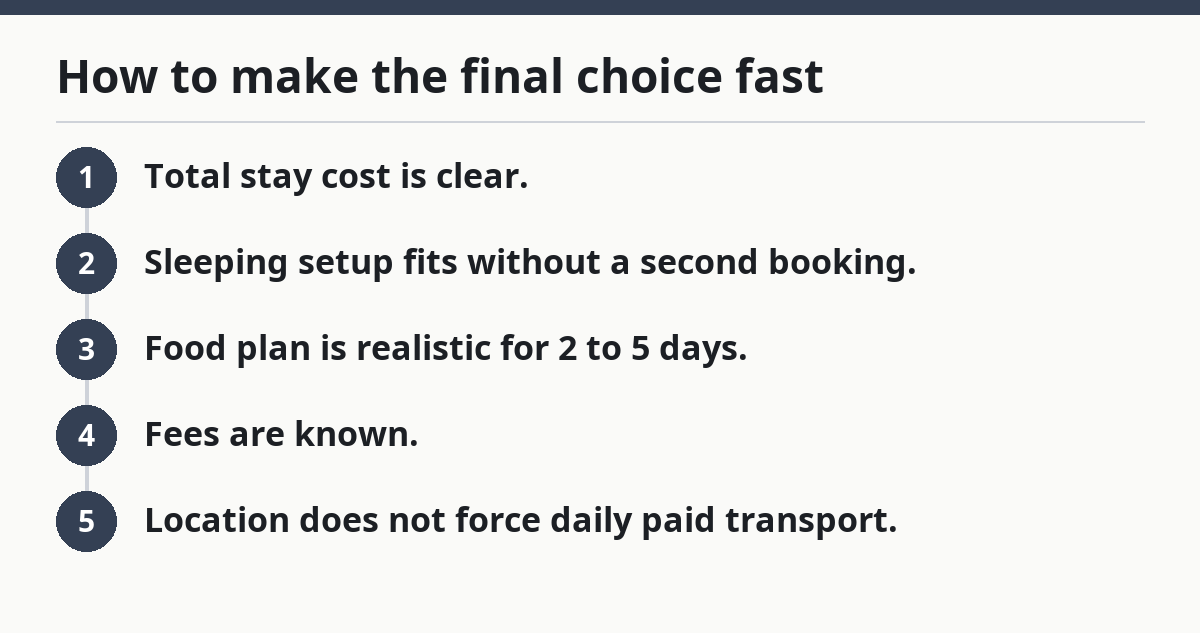
Use this final check before paying:
- Total stay cost is clear.
- Sleeping setup fits without a second booking.
- Food plan is realistic for 2 to 5 days.
- Fees are known.
- Location does not force daily paid transport.
That is the whole trick. A family hotel stay saves money when the room shape, kitchen access, and fee structure match the trip. If those three things are wrong, the cheapest-looking listing is usually the expensive one.
Key Takeaways
- The real price is the total bill, not the first number shown in search results.
- Room shape matters: a suite room or connecting rooms can beat a “cheap” single room for families.
- Kitchen access pays off fastest on longer stays and for breakfast-heavy trips.
- Resort fees, parking, and cleaning charges can flip the winner.
- A slightly farther location can save money, but only if transport stays simple.
For a broader trip budget framework, I would pair this with the guide to how to plan a budget family vacation.
Is a vacation rental cheaper than a hotel for families?
Sometimes, but not always. A vacation rental is often cheaper when the family needs two bedrooms, a kitchen, or several nights in one place. A hotel can be cheaper for a short stay, especially if parking or cleaning fees would make the rental cost more. Compare the full stay, not the nightly rate.
Should families book one room or two?
One room is usually cheaper, but two rooms can be smarter if the family needs sleep, privacy, or separate bedtimes. A suite room can split the difference by giving you extra space without paying for a second full room. Check the final total for all fees before deciding.
How do I avoid hotel extra fees?
Read the booking page until you find the total due, not just the nightly rate. Look for resort fees, parking charges, breakfast costs, and extra-person or rollaway-bed fees. If the property charges mandatory extras, include them in your comparison before you book.
Drafted with AI; not yet reviewed by a person.