Last updated: November 19, 2026
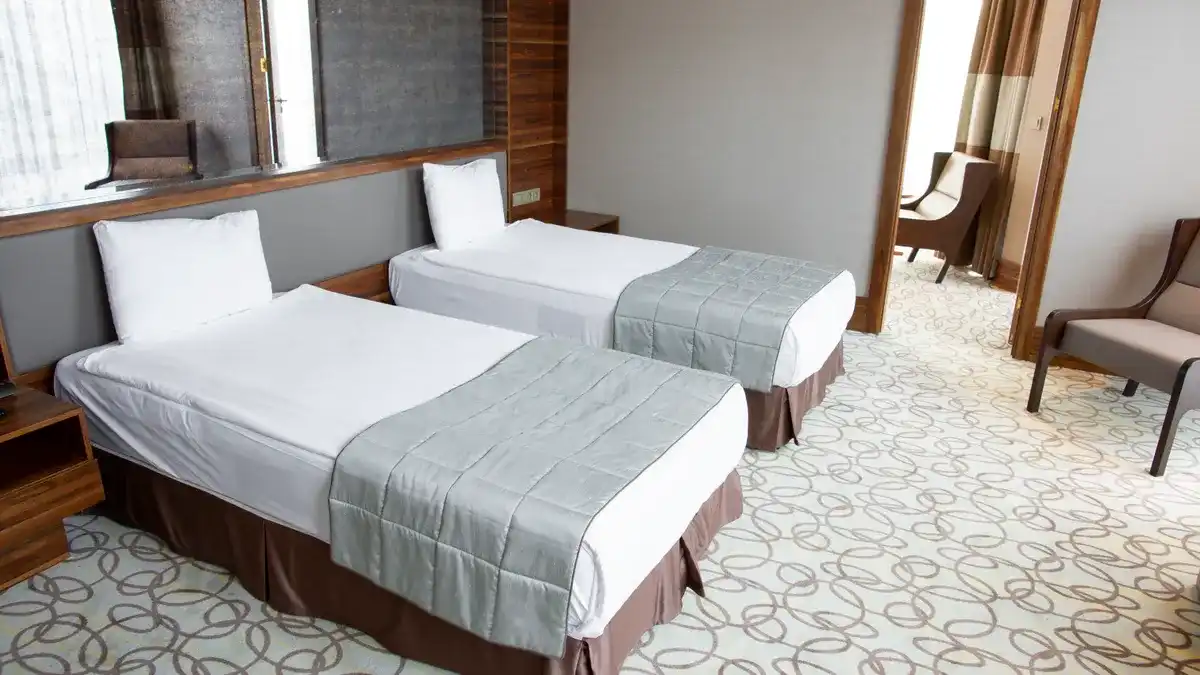
The best budget family hotel room type for sleeping more comfortably is usually a king room with a sofa bed if your family can tolerate one open sleeping area, or two queens if everyone needs a real mattress and a little personal space. For quieter nights, connecting rooms beat both, but they usually cost more and should be treated as the fallback from the budget-friendly options. This guide to Best Budget Family Hotel Room Types for Sleeping More Comfortably focuses on room layouts, not marketing labels.
I write on family lodging planning and room layouts, so the difference between a room that looks fine online and one that actually lets people sleep is the part that matters most. In the U.S., hotel occupancy averaged 62.8% in 2023, so the room you book matters in a crowded market. If you want a planning baseline, the budget family lodging planning hub should sit behind this page.
Key takeaways
- A king plus sofa bed can be the cheapest way to keep everyone in one booking when the sofa bed is genuinely usable.
- Two queen beds are often the most practical budget pick for many families because both adults and kids get proper mattresses.
- Connecting rooms win for sleep quality and privacy, but they stop being a budget choice fast.
- Family suites make sense when one shared room would turn bedtime into a full-time negotiation.
- Rollaway beds and cribs solve age gaps, not space problems; they help only when the room still has enough clearance to walk.
Which family hotel room type usually sleeps the best for the money?
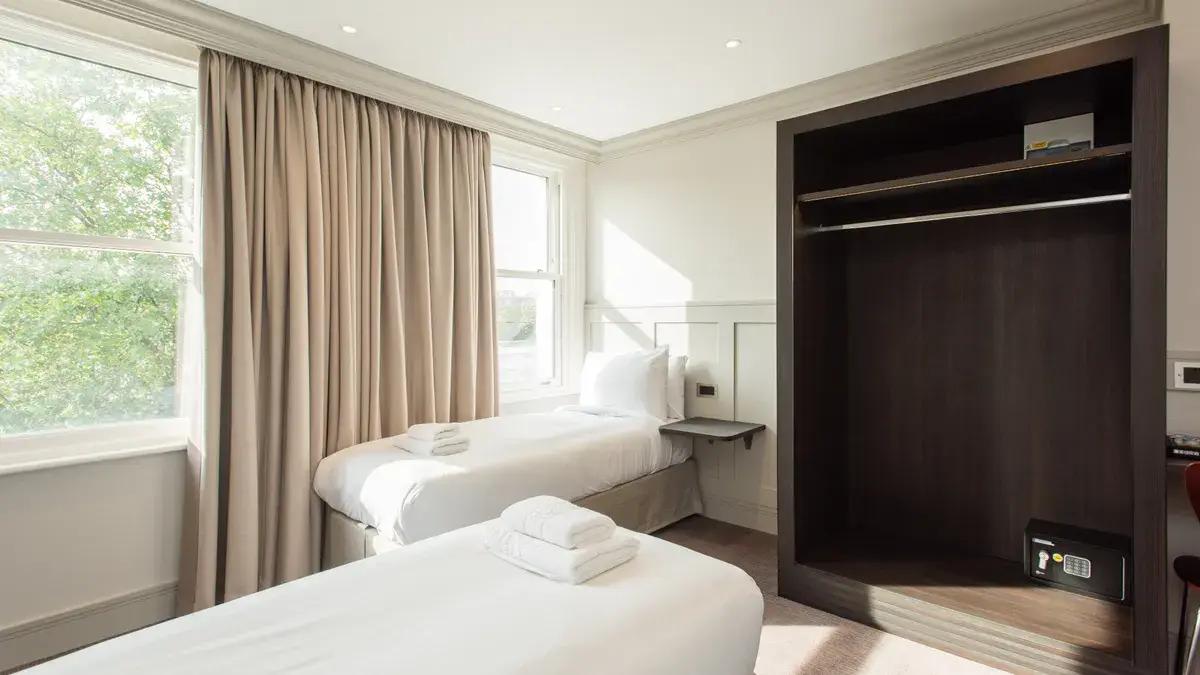
Usually, two queen beds give the best mix of sleep quality, price discipline, and low drama for most budget family trips. A room with two standard beds avoids the biggest weakness of sofa beds: the mattress is often thin, the frame sits low, and the bedding tends to be less comfortable than the main beds. In AAA’s 2024 lodging data, the average U.S. daily rate was $156, so room type can move the budget more than people expect.
That said, the “best” room type depends on who is sleeping. A family with one baby and one older child may do better in a king room with a crib and a sofa bed. A family with two school-age kids usually sleeps better in two queens. A family with a light sleeper or a parent who wakes at every movement should look hard at connecting rooms, even if the total rate is higher.
The sleep question is not just mattress comfort. It is noise, bedtime conflict, and how many people must cross the room to reach the bathroom. A room can be cheap and still be a bad bargain if somebody has to sleep in a bad position beside a hallway door, an ice machine, or an air conditioner that cycles all night. Consumer Reports has also repeatedly noted that hotel room noise and sleep disruption matter as much as bed comfort in travel planning.
For a broader planning framework, the hub on budget family lodging planning should sit behind this page, because room type works best when it matches the rest of the trip. Related background on hotel room types and family hotel booking tips can also help before you book.
Two queens: the safest budget choice for most families
Two queens are often the safest budget family hotel room type because they give you two real beds without paying for a suite or splitting into separate rooms. That matters when the goal is simply to get four people through the night with the least friction.
The main advantage is obvious: adults and children can separate by age, noise tolerance, or habit. If one child rolls constantly or one parent needs to sleep earlier, two queens reduce the chance that everyone is disturbed by one restless sleeper. Standard queen mattresses also tend to be the most predictable sleeping surface in this category, because they are the hotel’s default family setup in many limited-service properties.
The weakness is also obvious. Two queens usually mean one room, one bathroom, and no true privacy. If bedtime and wake-up times differ by several hours, that single space can become awkward quickly. Two beds do not solve snoring, early risers, or a child who needs a light on to fall asleep. They also leave little room for a crib or rollaway once luggage is open.
Use two queens if the family is small enough to share one room and the children can sleep through normal room noise. Skip it if one person requires darkness, quiet, or separation from siblings. In that case, a suite or connecting rooms may be worth the extra cost because sleep quality is the actual goal, not just four places to lie down. For families comparing layouts, two queen beds vs king sofa bed is often the first real decision.
King plus sofa bed: when one room is enough and when it is not
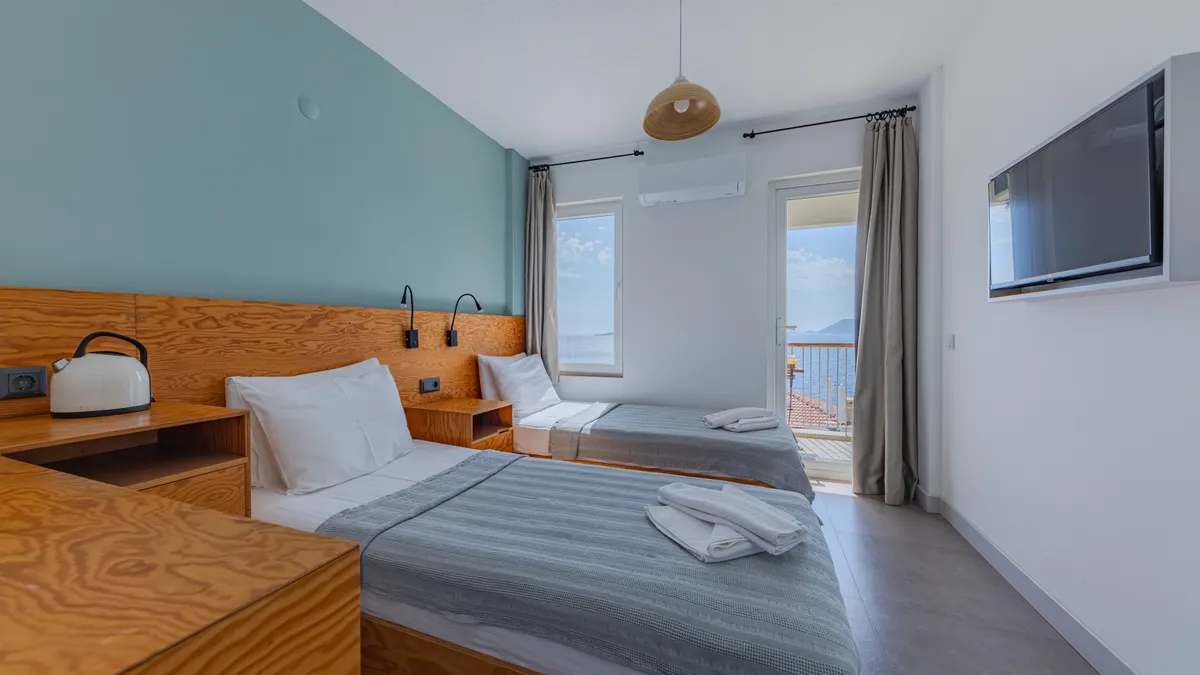
A king plus sofa bed wins for families trying to keep the booking compact, especially when one parent wants a larger bed and the children are younger or smaller. It is often the most practical one-room setup because it gives adults a proper king mattress and a second sleep surface without paying for two bedrooms.
The strength of this layout is flexibility. A king bed is usually better than two smaller beds for a couple, and the sofa bed can absorb the extra sleeper without forcing the room into a suite price band. This setup often works well for one adult and one or two children, or for two adults plus one child who can sleep anywhere. If the hotel specifies a pullout sofa rather than a daybed, that is usually a better sign than a decorative couch that happens to unfold. Some hotels also describe a family room layout this way, so the label alone does not tell you much.
The drawback is that sofa beds are rarely the first choice for sleep comfort. The mattress may be thin, the support bars can be felt, and the setup often requires somebody to convert the seating area at night and reset it in the morning. That routine sounds minor until it happens after a late arrival or before an early checkout. A sofa bed also steals daytime seating space, which matters on a rainy trip when the room becomes the family’s only indoor base.
Choose this type if the kids are young, the trip is short, and the family can live with one sleeper on the sofa bed. Do not choose it if the sleeper on the sofa is already a poor sleeper, has back sensitivity, or needs a flat, quiet bed for more than one night. If a child needs a firmer mattress, a sofa bed hotel room can be the wrong compromise.
Connecting rooms: the best sleep, but not the best budget
Connecting rooms are the best option for sleep quality because they create real separation without forcing the family into a much more expensive suite shape. When a hotel offers two rooms with an interior door between them, bedtime noise drops, wake-up routines stop colliding, and adults can stay up later without hovering over sleeping kids.
This layout usually wins for families with older children, a baby who wakes often, or one adult who snores. It is also the best option when different sleepers need different temperatures, lights, or noise levels. A connecting door gives the family both proximity and a buffer, which is the rare combination that actually helps sleep.
The problem is cost and availability. Connecting rooms are not always offered in the same inventory as regular rooms, and they can disappear early. If available, they often cost more than one standard room, and sometimes more than a suite-style room that seems more convenient on paper. They also can reduce flexibility at check-in, since the hotel has to match two adjacent rooms at once.
They are not the right choice for travelers who only care about a low rate and can tolerate one shared room. They are also a poor fit if the hotel cannot guarantee the connecting setup. If the whole point is sleeping more comfortably, a “request” is weaker than a confirmed room type. If you are unsure, ask the property directly and, if needed, consult a travel professional before you book.
Family suites: worth it when bedtime is the hardest part of the trip
Family suites are worth the money when bedtime is the main problem, because a separate sleeping zone changes the whole rhythm of the room. A true suite gives the adults somewhere to talk, work, or pack after the kids are asleep, which is a major improvement over a single-room setup.
This is the room type that makes the most sense when a family needs one person up early, another asleep early, and no one wants to tiptoe around the bed area all evening. A suite can also handle extra gear better. A crib, luggage, and a stroller fit more naturally when the sleeping and living space are split. That separation matters more on multi-night stays than on a one-night stopover.
The trade-off is simple: suites cost more, and budget-friendly “suite” labels can be misleading. Some properties call a larger room with a partial divider a suite even when the sleeping area still sits in the same open space. That is not the same as getting separate rooms, so the layout matters more than the name on the booking screen.
Do not pick a family suite if the family is only staying one night, if the room will be used only for sleep, or if the suite is really just a larger studio with a sofa bed. In those cases, two queens often make more sense, because you are paying for sleep comfort rather than a living room you will not use.
What about rollaway beds and cribs?
Rollaway beds and cribs are helpers, not room types, and they only make sense when the base room already fits the family’s sleep plan. A crib helps a baby sleep safely in the room without taking up the adult bed, and a rollaway can turn a room with one king into a workable setup for a child.
The advantage is obvious: they can reduce the need for a second room or a bigger suite. The downside is just as clear. Rollaways take floor space, can be awkward to place near doors or bathroom traffic, and may not fit comfortably beside a king bed once luggage is open. Cribs also depend on the hotel’s policy and availability, which means the room type alone does not guarantee the setup.
The most useful way to think about these extras is as add-ons to a room that already works. A king room with a crib can be excellent for parents with one baby. A two-queen room with a rollaway is usually a bad idea because it quickly becomes cramped. That is the mistake generic advice gets wrong: it treats these items as if they solve the room, when they only solve one sleeping slot.
Do not rely on a rollaway if the room is already tight, if a child rolls a lot in sleep, or if the hotel does not clearly state where the extra bed can go. That is how a cheap booking turns into a nightly obstacle course.
The honest side-by-side
The best choice depends on how much privacy the family needs, how many real beds are required, and whether bedtime has to happen in one room or two. A 2024 Sleep Foundation survey found that 21% of adults sleep with a TV on, which is one reason room separation can matter.
| Criteria | Two queens | King plus sofa bed | Winner for this condition |
|---|---|---|---|
| Sleep comfort | Two real mattresses usually beat a pullout sofa | Better for the adults, weaker for the sofa sleeper | Two queens for mixed-age families |
| Privacy | Low; one room, one bathroom | Low; one room, one bathroom | Neither, if privacy is the priority |
| Flexibility with kids | Good for two kids or one child and parents | Good for younger children who can share | Two queens for school-age kids |
| Ease of setup | No conversion needed | Sofa bed must be opened and reset | Two queens for late arrivals |
| Daytime living space | Room stays simple | Sofa area disappears at night | Two queens for small rooms |
| Best use of a king bed | Not available | Excellent for the adult sleeper | King plus sofa bed for couples with one child |
| Noise separation | Poor | Poor to moderate, depending on layout | Neither for light sleepers |
| Budget control | Usually easier to justify | Often cheaper than a suite | King plus sofa bed when one sleeper can use it |
| Sleeping surface quality | More consistent | Depends on the sofa mattress | Two queens for back-sensitive sleepers |
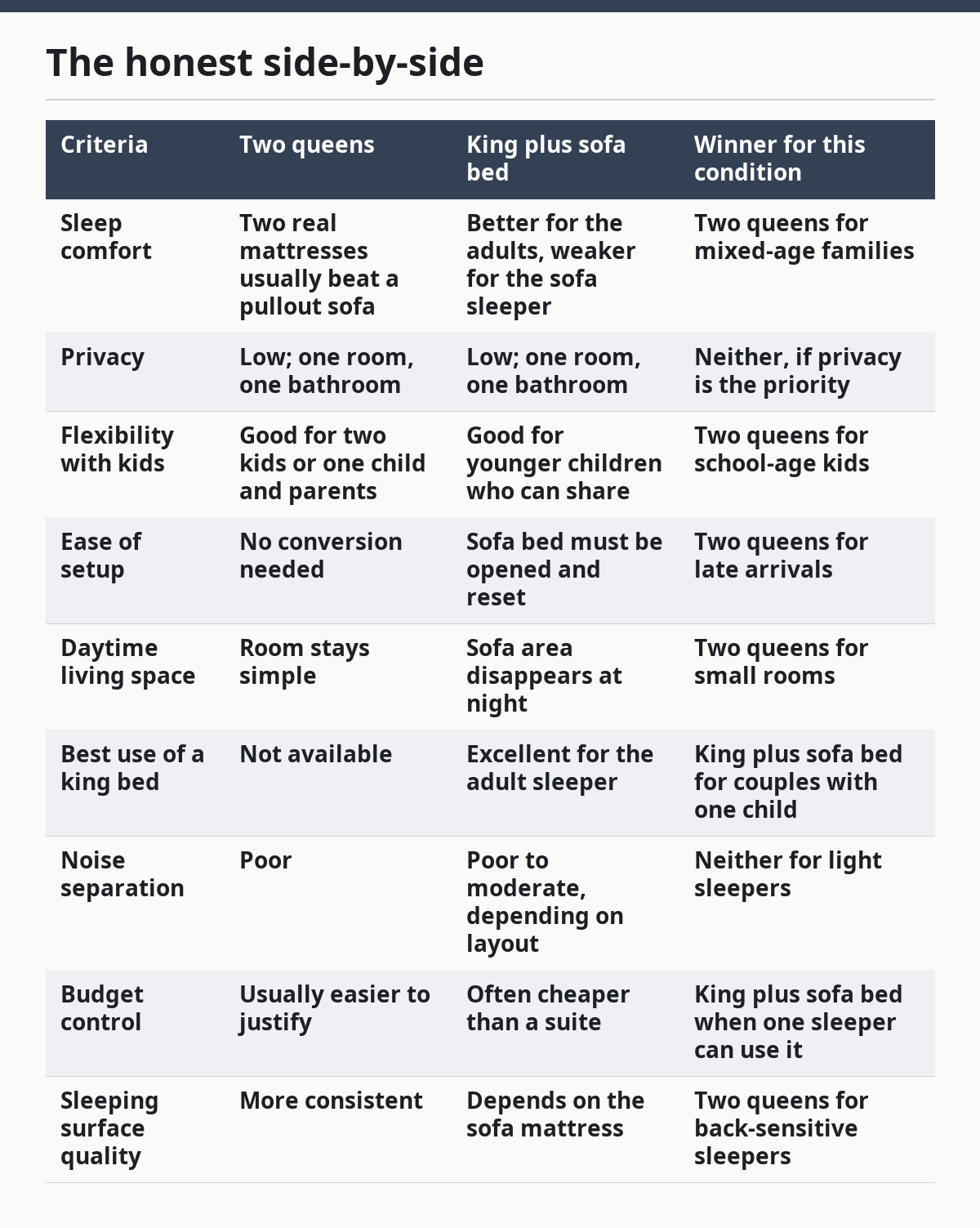
This comparison is why generic “family room” advice misses the point. A room can be marketed for families and still be wrong for sleep if it relies too heavily on the sofa bed or crowds everyone into one zone.
When should you choose connecting rooms or a family suite instead?
Choose connecting rooms or a family suite when the trip will fail if one person wakes up the others. That is the cleanest rule.
Connecting rooms win when the family has a baby, a snorer, older kids, or different bedtimes. They give separation without the full cost or formality of a large suite, and that is why they are the strongest sleep-focused option. A family suite wins when the family wants one booking and one shared living area but cannot tolerate a one-room layout.
Three exception scenarios flip the usual recommendation. First, if the hotel’s connecting rooms are not guaranteed, a two-queen room may be safer because it is actually available. Second, if the suite is only a large room with a sofa bed, the “suite” label should not override the reality of the layout. Third, if the family is only staying one night, the hassle of a larger configuration can outweigh the benefit.
A fourth exception is a very small child who sleeps in a crib. In that case, a standard king room can be enough, especially if the crib is placed well away from the bathroom and the door. That setup can be calmer than a bigger room with awkward furniture placement.
The Verdict: which room type should you book?
Choose two queens if your family wants the most practical budget pick for real sleep, especially with two children or two adults who both need a proper mattress. Choose king plus sofa bed if one adult wants the king and one child can genuinely sleep on the sofa bed without drama. Neither if your family needs privacy, different bedtimes, or a quiet night with a light sleeper in the mix; in that case, start with connecting rooms or a true family suite.
Which hotel room setup works best for a family of four?
Two queens usually work best for a family of four because everyone gets a real bed and the room layout stays simple. A king plus sofa bed can work if one child is small or sleeps deeply, but the sofa bed is the weak link. If one parent snores or one child wakes easily, connecting rooms are the better answer.
How do you avoid paying for two rooms when one room will do?
The easiest way is to match the room type to the sleep problem, not the fantasy of extra space. If everyone can share one room, two queens or a king plus sofa bed is usually enough. A crib, a rollaway, or a better bed layout can solve the issue without jumping straight to two rooms, but only if the room still has enough floor space to function.
Drafted with AI; not yet reviewed by a person.