

Last updated: October 20, 2026
Quick answer: For many families, the Midwest is the best starting point for a budget trip, while the South is often the strongest warm-weather value. The Northeast and West can still work, but usually with a narrower route or a higher total cost. This article covers the Best Budget Family Trips by Region in the US and helps families choose the right region before they pick a city, park, or coast. I write on family travel and trip planning with a focus on cost, pacing, and the trade-offs that matter once you add kids, meals, and transit.
Key takeaways
- The Midwest is often the safest first pick for low-cost family travel that still gives you road-trip variety, roomy stays, and easy pacing.
- The South is strongest for warm-weather travel, longer shoulder seasons, and trips built around driving instead of flying.
- The Northeast can work on a budget if you anchor around one region and avoid a string of expensive stops.
- The West is hardest on a tight budget unless you keep the trip narrow and accept higher transport and lodging costs.
- For many families, the right move is not “cheapest destination,” but “cheapest region for the kind of trip you actually want.”
Which U.S. region is the best budget family trip choice?
Usually, the Midwest is the default answer. It bundles lower-stakes road trips, plenty of drivable cities and parks, and fewer places where every line item spikes at once. Not every Midwest itinerary is cheap, of course. Still, the region is friendlier to families who want short flights, a car-based plan, and less of that premium-price sting.
But what if your family wants beaches, mountains, or a winter break? Then the South or West may fit better, even when the budget stretches. Match the region to the trip shape.
Here’s the cleanest way to think about it: the Midwest is the most affordable all-purpose family option; the South brings strong value for warm-weather driving trips; the Northeast suits compact, history-heavy plans; the West works best when scenery is the main event and the route stays disciplined.
For a fuller planning framework, this page fits into the hub on budget family trip planning by destination type, where the next decision is whether you want a city stay, road trip, beach trip, or park trip.
The Midwest: the strongest all-around budget region for families
Families who want to stretch a trip without building every day around a major attraction ticket usually do best here. Chicago, Milwaukee, Indianapolis, Columbus, Kansas City, Minneapolis, and St. Louis all support low-drama itineraries with public parks, free museum days, lakefronts, and neighborhoods that do not force expensive transfers between sights. And in road-trip terms, shorter legs between stops matter a lot once kids start bouncing off the car seats after two or three hours.
The real advantage is flexibility, not flash. A Midwest trip can be a 4-day city-and-park weekend, a 7-day loop through two or three states, or a longer drive with one major anchor city and a few smaller stopovers. That makes it easier to keep hotel nights and driving fatigue in check.
The downside is plain: the Midwest does not cover every vacation dream. If your family wants ocean swimming, big mountain drama, or a trip that feels larger than life just from the view, this region may seem a little flat. Planning matters here more than impulse. One or two anchors usually beat a zigzag route.
This region is not the right pick for families who want a single iconic resort experience, a beach-first vacation, or a trip where the destination itself is the whole event. It is the right pick for families that want a practical, low-friction trip with room to adapt.
According to the U.S. Bureau of Economic Analysis, inflation-adjusted personal income varies by state, which helps explain why some regions feel easier to budget for than others. That gap shows up in family travel once lodging and meals are added. For families looking for a simpler trip structure, the Midwest often keeps those choices manageable. See also our guide to cheap family road trips.
The South: best for warm-weather value and easy driving trips
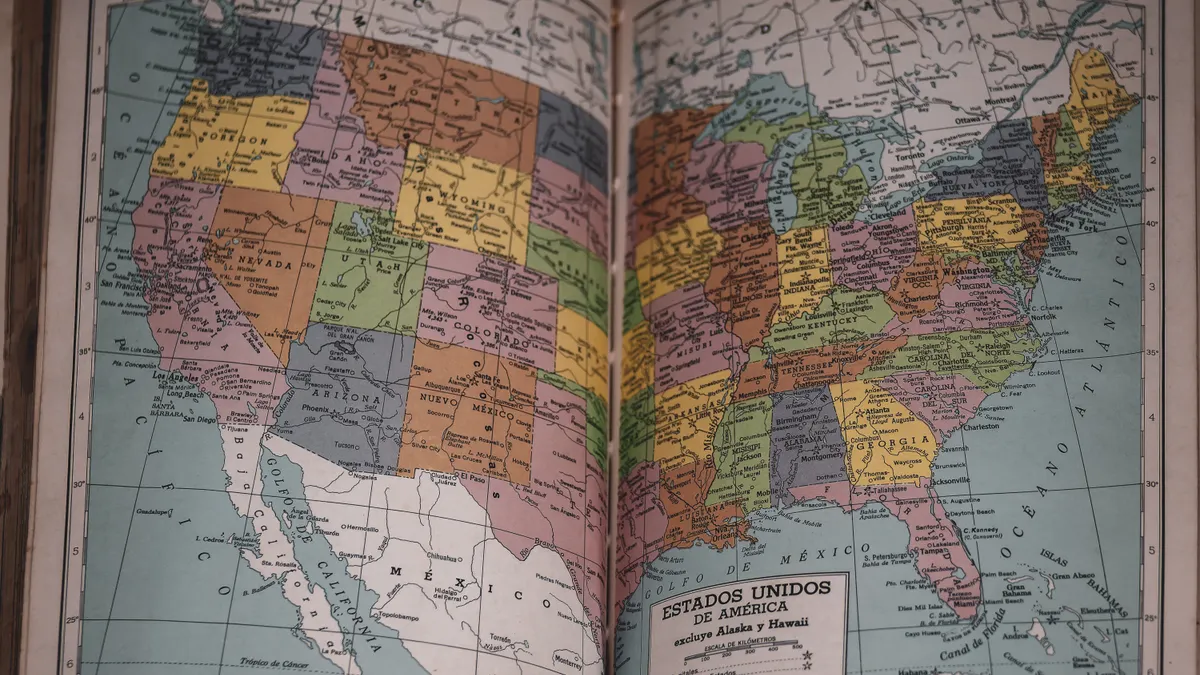
If your family wants the most usable days out of one trip and would rather drive than fly, the South usually wins. It is the strongest budget region for warm-weather travel, shoulder-season getaways, and itineraries where the weather itself is part of the appeal. A South trip might mean historic cities, state parks, Gulf-side coastal towns, inland lake areas, or a chain of smaller stops linked by manageable drives.
The reason the South often feels budget-friendly is straightforward: many trips here are built around distances you can cover by car, which trims airfare and makes multi-stop travel simpler. Families can also find more options outside the narrow summer window, which helps when school calendars pin you to spring or fall. That extra flexibility is a real budget advantage.
But the trade-off is real. Heat, peak holiday demand, and long-distance driving can quietly push the total higher. Summer travel in much of the region can mean more air-conditioning, more indoor paid activities, and more schedule-wrangling around weather. Popular coastal spots and theme-park-heavy areas can blow past the budget faster than expected.
The South is not the best fit for a family that wants crisp-cold weather, big-city transit, or a landscape-first vacation. It does fit families who want a road trip with a strong chance of low lodging pressure, a longer usable season, and lots of ways to keep the itinerary simple.
For practical timing, shoulder season can matter as much as destination. The National Oceanic and Atmospheric Administration tracks climate normals and seasonal patterns, and those patterns often make spring and fall easier travel windows than midsummer. That is one reason the South can be a better regional fit for some school-calendar trips. If you are comparing options, our family beach trip planner can help narrow the route.
The Northeast: best when you want compact history and shorter driving days
The Northeast works best for families that want a dense, walkable trip with short gaps between stops, even though it is usually not the cheapest region overall. Its value comes from efficiency. You can build a strong family trip with fewer miles, more train or short-drive options, and a mix of history, coastal towns, museums, and national or state park visits that do not require a giant route.
That compactness is the region’s real budget edge. Plan tightly, and you cut down on long transit days and avoid the “we spent the whole day getting there” problem. For families with younger kids, that matters; a shorter transfer day often saves money in meals, parking, and the impulse spending that tends to follow exhaustion.
The weakness is cost concentration. Lodging, parking, and some attraction prices can run higher than in the Midwest or many Southern markets. And the Northeast can lure families into stacking too many famous stops, which turns a budget trip into a parade of premium days. A Northeast itinerary works best when you stick to one corridor, one metro area, or one compact loop.
This is not the region for families whose main goal is the lowest total spend. It is the region for families who care more about making a limited number of days work hard, especially when school breaks are short and the itinerary needs to stay tight. Amtrak’s route map and service options can also help families keep a Northeast trip compact when they want fewer driving days.
The West: best for scenery-first trips, not for the tightest budgets
The West only wins when the trip’s value comes from the landscape itself. Mountains, deserts, national parks, dramatic drives, and wide-open space are where it delivers best. Yet it is usually the weakest region for strict budget control because distances are longer, certain destinations cost more, and families often need either extra driving time or more airfare to pull the trip off.
A West trip can still work on a budget if you keep the route narrow. One state, one park corridor, or one city plus nearby day trips is a better bet than a grand multi-state loop. Families that try to “see everything” in the West often end up paying more for fuel, lodging, and park-adjacent stays than they planned. The math stops working fast.
The upside is simple: the scenery does a lot of the entertainment work for you. That can reduce the need for multiple paid attractions. A park-heavy West trip can be a strong value if you keep meals simple, start early, and avoid overbooking the route.
The West is not the right pick for families whose budget is already tight and whose main goal is low-cost, low-stress travel. It fits families willing to pay more for the kind of trip that feels bigger and more dramatic. If the scenery is not the point, the West usually loses on value. The National Park Service is a useful planning source here, especially when you are checking entry rules and access before you book. For more route ideas, see national park family trips.
Head-to-head: which region wins for your family trip?
The Midwest wins most direct comparisons for families who want broad affordability without giving up variety. The South wins when warmth, driving, and shoulder-season flexibility matter more than pure cost. The Northeast wins when short routes and dense itineraries matter most. The West wins only when the trip is built around scenery and you accept the budget trade-off.
| Criteria | Midwest | South | Winner for this condition |
|---|---|---|---|
| Lowest overall budget pressure | Usually strongest | Strong, but varies by coast/season | Midwest for a general family trip |
| Warm-weather value | Good, but not the point | Strongest | South for spring/fall warmth |
| Short driving distances between stops | Strong | Strong | Midwest for simple road loops |
| History and culture without long transit days | Good | Good | Northeast for compact itineraries |
| Scenery as the main payoff | Moderate | Moderate | West for landscape-first trips |
| Flexibility across school breaks | Strong | Strong | South for longer warm seasons |
| Ease of planning a multi-stop route | Strong | Moderate | Midwest for a first road trip |
| Risk of budget creep | Lower | Moderate | Midwest for families watching every line item |
| Best fit for a “big trip” feel | Moderate | Moderate | West for scenery-driven trips |
The table is blunt for a reason. Families should not shop regions the way they shop hotels. The region choice determines how many paid decisions follow later.
When the usual ranking flips
The Midwest is not always the winner. It loses when your family has a very specific trip goal that another region serves better.
Long weekend, dense itinerary, history focus? The Northeast can beat the Midwest. Fewer driving hours means less wasted time, even if daily costs are higher.
If your trip must happen in a warmer stretch and you want maximum flexibility outside summer, the South can be better value than the Midwest. That matters for families working around school calendars and sports schedules.
Scenery changes the equation too. When the view is the reason for the trip, the West becomes the right call even on a tighter budget. A family can trim costs elsewhere in the itinerary, but the region’s long distances and premium destinations still make it a harder budget match.
Flying in from far away can also flip the answer. The “cheapest region” may shift based on airfare more than lodging. A region that looks cheap once you land may become expensive if the flights are bad. Check the current total trip cost, not just the destination cost.
The verdict: which region should you choose?
Pick the Midwest if you want the safest budget choice for a flexible family trip with road-trip options, manageable distances, and fewer premium-priced pressure points. Pick the South if your trip depends on warm weather, a longer travel season, and easy driving between stops. Neither fits well if your family needs a beach-first getaway, a mountain-focused trip, or a very specific resort experience; those needs change the comparison entirely.
Which U.S. region is cheapest for family trips?
The Midwest is usually the cheapest region for family trips when you look at the broadest range of itineraries. It tends to support shorter drives, more practical road trips, and fewer high-cost “must-do” stops than the West or parts of the Northeast. Still, the cheapest final trip depends on where you fly from, how many nights you stay, and whether you want major attractions.
What region has the most affordable family vacations?
The Midwest usually has the most affordable family vacations overall. It works especially well for families that want a car-based trip with flexible stops, decent city options, and fewer expensive chain reactions from parking, transit, and premium lodging. The South can rival it for specific warm-weather trips, but the Midwest is the strongest general answer.
How do regional costs differ for family travel?
Regional costs differ most in lodging, transport, and the amount of driving between useful stops. The Northeast often costs more per day because compact itineraries can still carry high lodging and parking costs. The South and Midwest usually give better value for road trips. The West often costs more when distances, airfare, and scenery-driven destinations all stack up.
Drafted with AI; not yet reviewed by a person.
