Last updated: November 20, 2026
Quick Answer: For How to Plan a Family Trip Around Same-Day Flight Delays Without Wasting a Night, a 1-night buffer on the first day is often the simplest way to protect sleep without padding the whole trip. For most families, that means giving the arrival day a cushion, choosing a backup hotel night only when the flight lands late enough to ruin check-in, and deciding in advance when a flight delay is big enough to trigger rebooking. The goal is simple: protect sleep, meals, and the next morning without paying for a night you may not need.
Key takeaways
- Put the buffer on the first day, where a delay hurts most.
- Decide your rebooking trigger before you leave home, not at the gate.
- A late arrival often costs more than a room; compare hotel night, food, and lost sleep.
- Keep one backup plan for lodging and one for food so the delay does not turn into a scramble.
- A long layover can help if it gives you a safer same-day connection, but it can also tire out children fast.
What is a travel itinerary buffer?
A travel itinerary buffer is extra time or flexibility built into a plan so one flight delay does not knock out the rest of the trip. On a family trip, the buffer usually belongs before the first hotel check-in, before a timed dinner, or before any next-day activity that needs everyone rested.
The easiest way to think about it is this: if your flight slips by 2 hours, what breaks? If the answer is only a dinner reservation, you may not need much padding. If the answer is “we miss the hotel desk, the dinner, and the next morning starts in chaos,” the buffer is too thin.
This matters more with children because a delay changes the whole pace of the day. A missed meal, a 90-minute wait at baggage claim, and a late taxi can turn a manageable problem into a long night. The buffer is not only about expecting the worst; it is about deciding which part of the plan can absorb a delay of a few hours without wasting a hotel night or forcing a bad arrival.
A good buffer is also different from a layover. A layover is part of the route; a buffer is spare room in the plan. A 2-hour layover may be normal, but it is not a cushion if the first flight is delayed and the second flight leaves with no slack.
How do I plan the first day around a same-day delay?
Plan the first day around the latest arrival you can tolerate, then build the rest of the day backward from that point. Start with the hotel check-in time, dinner time, and the sleep time your children actually need, then decide what flight timing still leaves the trip intact.
Use this order:
- Write down the trip’s hard stops. Note the hotel check-in time, any planned meal, and the earliest activity the next morning. A 3:00 p.m. check-in and an 8:00 a.m. activity the next day leave very little room for a late flight.
- Set a delay threshold. Pick the point where you would rather change the plan than keep waiting. For many families, that threshold is a delay long enough to push arrival past dinner or past a child’s normal bedtime.
- Choose a backup arrival path. Decide whether you would take a taxi, airport shuttle, or rideshare after landing. The less you improvise at midnight, the less stress you carry through the terminal.
- Reserve the first night only if the arrival window is fragile. If the flight is likely to land late enough that you would check in after midnight, a booked room can protect sleep and keep the next day usable.
- Save one simple food plan. Know the nearest airport lounge, 24-hour café, or late-night food option before takeoff. A child who needs food at 10 p.m. does not care that the original dinner plan was nicer.
- Keep the next morning light. If possible, avoid an early tour, a long drive, or a tight connection to a second flight. A buffer loses value if the next day starts at 6:00 a.m. anyway.
The point is not to pad every hour. The point is to protect the hours that matter most. If you build in a full free day, you may waste time and money. If you build in no slack at all, a same-day flight delay can erase the first night of the trip.
When should I book the hotel night?
Book the hotel night when a late arrival would cost more than the room itself in stress, sleep loss, and missed plans. That is often true when the flight can arrive after midnight, when the airport is far from the hotel, or when the next day begins early.
A room makes sense when the alternatives are ugly. Sleeping in a terminal with children, hunting for a midnight meal, or checking in so late that everyone wakes up tired usually costs more than the room in real life, even if the room looks expensive on paper. A backup room is not just a bed; it is a reset button.
Do not book the extra night automatically. If the flight is only mildly delayed and the hotel can still be reached before normal bedtime, the extra room may sit empty. That is the trade-off: paying for certainty versus paying only when the delay becomes real.
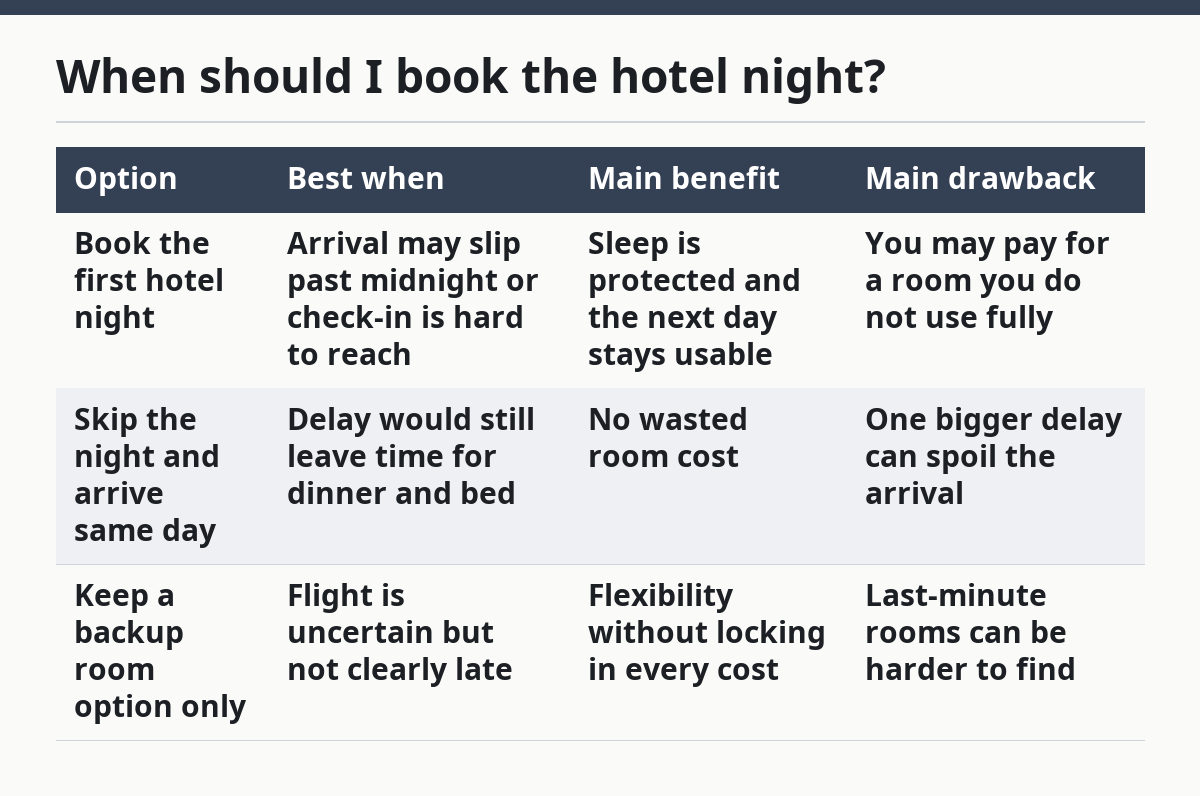
Here is the practical comparison:
| Option | Best when | Main benefit | Main drawback |
|---|---|---|---|
| Book the first hotel night | Arrival may slip past midnight or check-in is hard to reach | Sleep is protected and the next day stays usable | You may pay for a room you do not use fully |
| Skip the night and arrive same day | Delay would still leave time for dinner and bed | No wasted room cost | One bigger delay can spoil the arrival |
| Keep a backup room option only | Flight is uncertain but not clearly late | Flexibility without locking in every cost | Last-minute rooms can be harder to find |
A useful rule is this: if a delay of a few hours would force you to choose between sleep and money, decide that before departure. That decision belongs in the trip plan, not in the airport at 11:30 p.m.
How do I decide on connection padding?
Connection padding is the extra time between flights that helps one delay not break the whole route. For a family, the right padding is the one that leaves time for a bathroom stop, a snack, and a gate change without turning the second flight into a sprint.
This is where many plans fail. A short connection may look efficient on a booking screen, but it gives no room for a late boarding, slow deplaning, or a child who needs a bathroom before the next gate. A longer connection can be safer, but too much padding can leave children bored, tired, and hungry.
Use the following comparison to think it through:
| Connection shape | What it protects | What it risks |
|---|---|---|
| Tight connection | Faster total travel time | One delay can cause a missed flight |
| Moderate padding | A delay, a meal break, and a calmer gate change | More airport time |
| Long layover | More recovery if the first flight is late | More waiting, which can wear children down |
If the trip includes a same-day flight delay risk, the buffer should usually come from the first day, not from a very short connection. A child who has been up for 12 hours does not benefit from saving 20 minutes in the schedule. A calmer route is often worth more than a slightly shorter one.
The same idea applies after landing. If your arrival airport is 45 minutes from the hotel, that drive is part of the buffer decision. A flight that lands late and still needs a long transfer may need a hotel night more often than a flight that lands close to the stay.
What should I do while waiting with children?
Keep children fed, seated, and moving in short bursts so a delay does not become a meltdown. A waiting plan works best when it includes snacks, water, a charger, one quiet activity, and a place to walk for 5 or 10 minutes.
The airport lounge can help if you have access, because it gives a calmer place to sit and reset. That is useful when the delay is long enough to stretch over a meal or bedtime, but it is not magic. A lounge still has the same clock, and children still get tired.
A simple waiting kit should cover the basics:
- one snack with no mess
- one drink each
- a charger or battery pack
- headphones or a quiet game
- a small change of clothes for younger children
Do not rely on the airport to keep everyone comfortable for hours. Food courts can close, seats can fill, and gate changes can happen fast. If the delay looks long, move from “wait and hope” to “reset the day.” That may mean one meal, one bathroom break, and one plan for the next 2 hours instead of trying to make the original schedule survive unchanged.
If the delay is making the rest of the itinerary collapse, use the rebooking trigger you set earlier. A clear trigger is better than arguing with the clock for another hour.
When does travel insurance help?
Travel insurance helps when the delay creates extra costs you would otherwise absorb, such as a hotel night, meals, or a rebooking expense that fits the policy. It is most useful when you have nonrefundable plans or a route where one delay can damage the rest of the trip.
Do not buy insurance as a vague sense of safety. Read the policy for delay rules, covered expenses, and any time threshold that must be met before a claim applies. Some policies are more helpful for long delays than short ones, and some are more helpful for trip interruption than for a simple same-day slip.
Because delay coverage varies by policy, if you are unsure how a booking would work after a missed connection or late arrival, check the policy or ask the insurer or a qualified travel professional before the trip starts. The U.S. Department of Transportation explains that delay-related compensation and service options depend on the carrier and the circumstances, so the details matter.
A practical use of insurance in this situation is as backup, not as the main plan. The main plan should still answer the basic question: if the flight arrives late tonight, where does the child sleep, what gets eaten, and what gets moved to tomorrow?
What is the mistake that costs the most?
One of the most expensive mistakes is treating the arrival day like a normal day and hoping the flight stays on time. That can cost a hotel night, a meal, a morning activity, and the family’s energy all at once.
The second big mistake is overbooking the first night with plans that assume a perfect landing. A dinner reservation, a long transfer, and an early wake-up may be fine on paper, but they break fast when the flight slips. The cost is not just money. It is also the lost chance to start the trip calmly.
A practical fix is to choose one of two honest approaches:
- build in a real buffer and accept some spare time, or
- keep the schedule lean but plan a backup hotel night and a late-arrival food option
A half-plan is the worst option. It wastes neither time nor money at first, but it leaves you paying both later through stress, missed sleep, and last-minute scrambling. For a family trip, the right answer is usually not “hope harder.” It is “decide earlier.”
For a wider planning framework, the route timing guide in the budget family trip route decision tools and timing hub can help with the bigger itinerary choices.
How do I choose the right rebooking threshold?
Choose the rebooking threshold before departure by asking what delay would make the original plan worse than a changed one. For many trips, that threshold is the point where a same-day delay starts to push arrival past bedtime, past hotel check-in comfort, or past the first activity of the next day.
This is not about airline policy alone. It is about your own trip. A 90-minute delay may be fine on a solo work trip and painful on a trip with a 4-year-old. A 3-hour delay may still be manageable if the hotel is close and dinner is flexible. The threshold should reflect the whole chain, not just the departure board.
Write the threshold in plain language:
- “If we arrive after midnight, we book the room.”
- “If the delay makes us miss dinner, we switch to airport food.”
- “If the connection drops below safe padding, we rebook the route.”
That kind of rule helps you act quickly. It also keeps tired adults from making a choice in the moment that they later regret. A threshold should be simple enough to use when the gate agent changes the plan and the kids are already tired.
How much buffer do families need for a delayed flight?
Families need enough buffer to absorb a delay without losing sleep, dinner, or the next morning. That usually means protecting the first night and the first 12 hours on the ground more than the rest of the trip.
The right amount depends on the arrival time, the drive from the airport, and how early the next day starts. If a modest delay would push arrival past midnight, the buffer is too thin. If the schedule still leaves time for a meal and a normal bedtime, the buffer may already be enough.
Should I book an extra hotel night for a late flight?
Book an extra hotel night when a late flight would push arrival into the middle of the night or make the next day useless. A room is worth more when the airport transfer is long, the children are young, or the next morning starts early.
Skip the extra night if the flight can still land and check-in at a reasonable hour. The goal is not to pay for certainty every time. The goal is to spend money only when the delay would otherwise wreck sleep or the first day of the trip.
What if a family flight arrives after midnight?
If a family flight arrives after midnight, treat the trip as a sleep problem first and a travel problem second. If a child has special sleep or health needs, consult a pediatrician or other qualified professional before travel. The first question is where everyone rests, then how food is handled, then how the next morning is changed.
A booked room, a clear ride plan, and a simple snack plan matter most here. If those are not in place, the delay can turn into a long, expensive night even when the flight itself was only late by a few hours.
For families traveling with children, the CDC’s travel guidance and the American Academy of Pediatrics’ family travel advice are useful references for keeping routines, food, and rest as stable as possible.
Drafted with AI; not yet reviewed by a person.