Last updated: November 19, 2026
A family suitcase gets heavy fast. Extra outfits are usually the reason. The travel laundry kit is the simplest way to rewear clothes on a family trip without cramming in backups you may never touch. Quick answer: for How to Pack Laundry Supplies for a Family Trip So You Can Rewear Clothes, a compact kit can handle the basics for a 3- to 7-day trip: detergent sheets or a small amount of concentrated liquid, a sink stopper, a drying line, a laundry bag, and quick-dry clothing. Pack them once. Then use them to wash and dry the pieces that get dirty first. This guide covers what to bring, how to pack it, and how to use it.
What belongs in a travel laundry kit
A travel laundry kit gives you the small tools you need to wash 2 to 4 items in a sink or tub and hang them overnight. Not a full laundry setup. Just enough gear to turn one dirty outfit into a clean one before morning.
For a trip of 3 to 7 days, a compact kit often covers the basics:
- detergent sheets or a small amount of concentrated liquid
- a sink stopper
- a clothesline or drying line
- a laundry bag for dirty items
- a few clothespins or clips
- a stain-removal wipe or bar
- a zip bag for wet socks, swimsuits, or underwear
None of this needs much room. A flat stack of sheets and a folded line take less space than a single backup outfit. That is the whole idea.
Put the kit in one small pouch
Keep every item in a single pouch around the size of a toiletry bag. Then drop that pouch into the same suitcase pocket every time. Split the pieces across three bags, and the kit vanishes right when you need it at 9 p.m.
A pouch also keeps detergent from leaking into chargers, books, or snacks. On a trip with kids, that small safeguard matters more than people expect. One wet bottle can mess up half a bag. Use a water-resistant pouch if you have one, but a plain zip pouch works too.
How to pack the travel laundry kit without wasting space
Pack the kit flat, dry, and together so it takes less room than one folded shirt. The trick is to build a kit that opens fast at night and disappears fast in the morning.
Start with the biggest item first, then layer the small pieces inside it.
- Place the laundry bag at the bottom of the pouch so it can hold dirty clothes later.
- Slip detergent sheets inside a zip bag or small envelope to keep them dry.
- Coil the drying line and tuck it beside the sheets.
- Add the sink stopper and clothespins in a side pocket.
- Put stain wipes or a bar in the outside slot for quick access.
- Leave the pouch near the zipper of the suitcase, not buried under shoes.
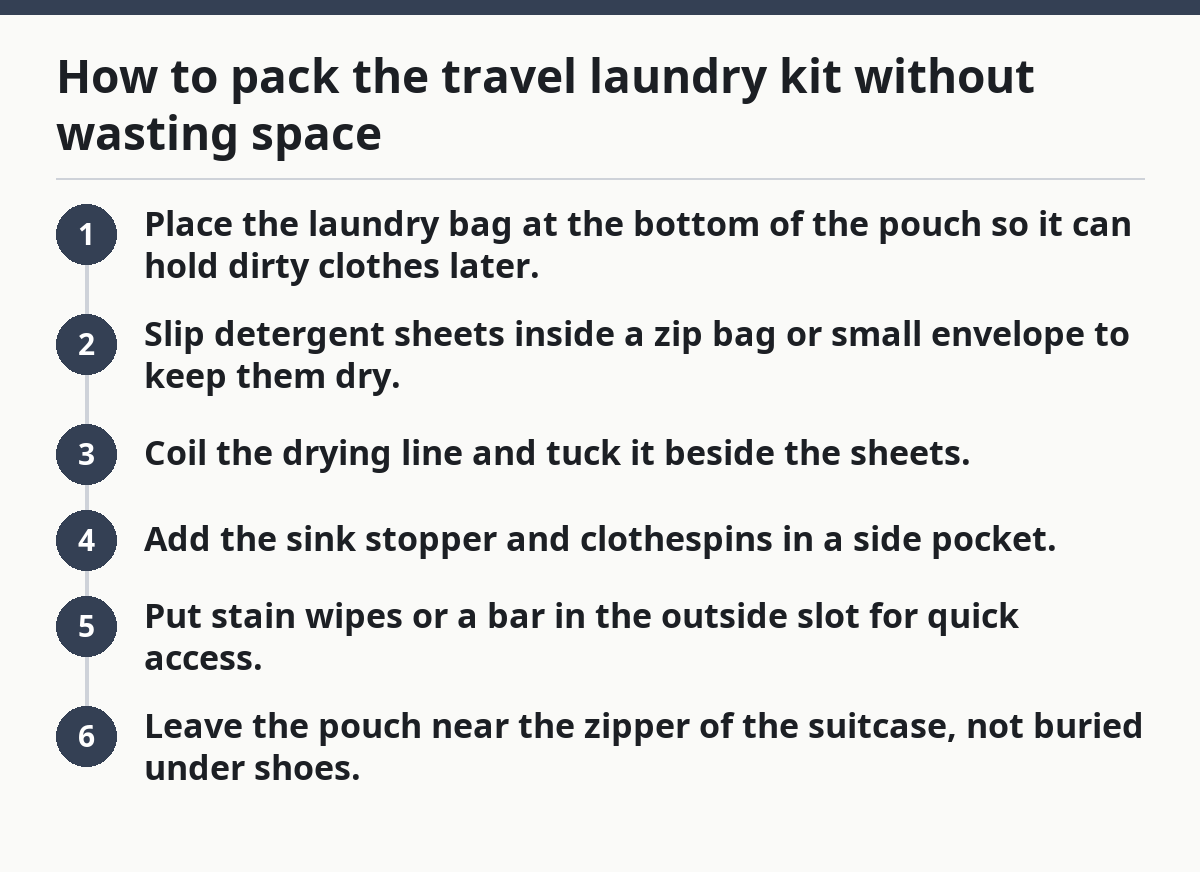
That setup keeps the kit easy to spot. It also makes the first wash take less than a minute to start. It avoids the common mistake of tossing detergent in loose, where it can tear, crumble, or pull in moisture like a sponge. If you are unsure what product to use, check the package directions or ask a retailer, pharmacist, or other qualified professional for guidance.
Choose the right detergent format
Detergent sheets are the easiest option for travel because they are light, flat, and less messy than a bottle. They also avoid the leak risk that comes with liquid soap in a warm bag.
There is one trade-off. Sheets are useful for light loads and handwashing, but they are not as flexible as liquid if you want to measure out a tiny amount or tackle a greasy stain. Use powder, and you need a dry container that seals well.
- Detergent sheets: best for fast packing and dry storage
- Concentrated liquid: best if you need more stain-fighting control
- Powder: best only if you already have a hard plastic tin
Want the simplest setup? Pack sheets and stop there. For most sinks and most short trips, that is enough. See also the packing list for family travel, the hotel room packing checklist, and how to pack a carry-on for a family of four.
How do you wash clothes in a sink on vacation?
You wash clothes in a sink by soaking, swishing, rinsing, and pressing out water, then hanging the items to dry. Small pieces work best: underwear, socks, T-shirts, and light shorts.
Use the sink stopper if the basin drains well. Check for a clean spot to hang clothes before you start. A towel bar, shower rod, or drying line across a bathroom corner can all work.
Then follow this order:
- Fill the sink with cool or lukewarm water, not hot.
- Add a detergent sheet and stir until it dissolves or breaks apart.
- Put in 2 to 4 items at a time so the water can move through the fabric.
- Swish the clothes for 1 to 3 minutes, then let them soak for a short stretch if needed.
- Rinse in clean water until the soap smell is faint.
- Press water out gently; do not wring delicate fabric hard.
- Hang the items with clips or drape them over a drying line.
That method keeps clothes cleaner without turning the bathroom into a laundry room. It also lets you rewear a shirt after one use instead of hauling two backups. For more on simple travel routines, see the family packing checklist and what to pack for a short trip.
Quick-dry fabrics make this work
Quick-dry clothing is the reason this plan works for a family trip instead of becoming a chore. Synthetic blends and thin knit fabrics usually dry faster than heavy cotton, denim, or thick sweatshirts.
A damp shirt at bedtime is still damp at breakfast. That math stops working fast. A thin shirt may dry overnight on a line. A thick cotton layer may still feel cold and wet after 8 hours in a room with weak airflow.
Look for fabrics that:
- feel light in the hand
- do not hold much water after rinsing
- dry flat without stretching
- resist odor better than heavy cotton in repeated wear
The catch is simple: quick-dry fabric often feels less soft than cotton. It may also show wrinkles or cling more. Still, if the trip plan depends on rewearing clothes, fast-drying fabric is the smarter choice.
What clothing should you pack so you can rewear it
Pack clothes that can be worn more than once before washing, especially tops, shorts, and base layers made from quick-dry fabric. The aim is not to stretch dirty clothes forever. It is to reduce the number of full outfit changes you need to bring.
This is where many packing lists go sideways. They focus on “one outfit per day,” which is a poor plan for a 5-day trip with laundry access. A better plan is a smaller set of clothes you can rotate, wash, and repeat.
Use this rule of thumb:
- pack 2 to 3 tops that dry fast
- pack 1 extra bottom per child if the trip is active
- choose underwear and socks that wash easily
- skip bulky items unless the weather forces them
For example, a child’s play shirt may be worn for half a day, washed that night, and worn again after breakfast. A hiking shirt can often do the same if it is not soaked in sweat or food.
The real benefit is practical. This approach can cut down on overpacking and leave room for snacks, medications, books, and the random items that always appear on a family trip. It also makes unpacking easier when dirty clothes already have a home. See also the family travel budget guide and how to pack less for vacation.
Use a laundry bag for dirty clothes, not a shopping bag
A laundry bag keeps dirty items together and makes sorting easier at the end of the day. A thin shopping bag tears, traps smell, and can leak moisture into the suitcase.
Pick a bag that closes with a drawstring or zipper if possible. If you use a plain drawstring bag, line it with a dry plastic sack for damp swimsuits or towels. That little move keeps wet fabric away from clean clothes.
How to dry clothes overnight in a small room
You dry clothes overnight by giving them air, space, and a line that keeps fabric off the floor and off each other. A drying line is better than a chair back because it gives you a better shape for airflow.
Set the line near a vent, fan, or open window if the room allows it. Hang the heaviest items first, then leave space between each piece. If you only have 1 towel bar, rotate items during the evening so both sides get air.
A few smart choices help here:
- squeeze out water before hanging
- hang shirts by the hem so the shoulders do not stretch
- clip socks and underwear by the waistband or cuff
- keep thick items separate from thin ones
- avoid piling damp clothes in a corner
Do not count on bathroom humidity to help. Steam slows drying, which is the opposite of what you need. If a shirt is still wet in the morning, put it back on the line while you pack other things.
Bring a backup for the one thing that dries slowly
Pack one extra lightweight top or swimsuit if your trip includes heavy use, because those items are the ones most likely to stay damp. Cotton hoodies, jeans, and thick towels are the slowest pieces in the pile.
That is the trade-off with rewearing clothes. You save suitcase space, but you need fabrics that can keep up with your schedule. If the itinerary has a pool, beach, or long hike, one backup item is wiser than trying to wash everything each night.
Common mistakes that make the kit fail
The kit fails when it is packed for an imagined laundry room instead of a real sink, real bag, and real night schedule. Overpacking soap and underpacking drying space cause most of the trouble.
A few mistakes show up again and again:
- bringing a full bottle of detergent, which wastes space and can leak
- forgetting the sink stopper, which makes handwashing annoying or impossible
- packing only heavy cotton clothes, which may not dry by morning
- leaving the drying line at the bottom of the suitcase
- stuffing wet clothes into the dirty bag without a separate dry sack
Each of those mistakes costs time. A leak ruins clean clothes. A missing stopper means you cannot wash efficiently. Slow-drying fabric means you end up wearing damp items or packing spares you did not want to bring.
Build the kit around the wash method you actually plan to use. If you are washing in a sink, pack for a sink. If you are hanging clothes in one room, pack a line long enough to span it. If you want to rewear clothes, choose fabric that dries in hours, not days.
Pack the kit once, then reuse it on every trip
Pack the same travel laundry kit before each trip, then restock only what you used. That habit saves mental effort and keeps you from forgetting the small things that make reuse possible.
Before you zip the bag, check these basics:
- detergent sheets
- sink stopper
- drying line
- laundry bag
- stain wipe or bar
- a couple of clips
Keep the pouch with your family travel gear so it becomes part of the routine, not a last-minute add-on. The money savings show up here. Fewer backup outfits. Less overpacking. Less need to buy replacement clothes because one piece got soaked, stained, or missed the wash.
For more family trip planning that keeps costs under control, the budget family trip planning hub is the right next stop. It sits next to this laundry plan for a reason.
Key Takeaways
- A small laundry kit can replace several backup outfits on a short trip.
- Detergent sheets, a sink stopper, a drying line, and a laundry bag do most of the work.
- Quick-dry clothes are the difference between “wash tonight” and “still wet tomorrow.”
- Handwashing 2 to 4 items at a time is usually enough for shirts, socks, and underwear.
- The main savings come from rewearing clean, fast-drying clothes instead of packing extras you never use.
What laundry items should I pack for a family vacation?
Pack detergent sheets, a sink stopper, a drying line, a laundry bag, and a few clips. If space allows, add a stain wipe and a zip bag for wet items. That small set covers most sink-wash needs without taking much room in your suitcase.
Can you do family laundry in a hotel room?
Yes, you can do small loads of laundry in a hotel room if the room has a sink, space to hang clothes, and enough airflow. A bathroom door, shower rod, or drying line can work for hanging items. Thick clothes may still dry slowly, so quick-dry fabrics matter.
How does packing laundry supplies save money?
Packing laundry supplies saves money by letting you rewear clothes instead of bringing more of them. Fewer backup outfits mean less luggage space taken up by clothes you may never wear, and less need to buy emergency replacements for stained or soggy items.
Drafted with AI; not yet reviewed by a person.