
Last updated: October 30, 2026
Quick Answer: for most families, the best lodging value is the room that cuts the total trip cost most effectively, and that is often worth about $40 to $80 a day in avoided meals if it includes usable space, the right sleep setup, and kitchen features. Budget Family Trip Planning by Lodging Value and Room Features — The Complete Guide is about choosing the stay that lowers the real bill, not just the nightly rate.
In short: pick the lodging that gives your family the most usable space, the sleep setup you need, and the kitchen or laundry features that cut your trip costs; the lowest nightly rate is often the wrong bargain once you add parking, breakfast, resort fees, and the cost of eating out. In Budget Family Trip Planning by Lodging Value and Room Features — The Complete Guide, that means looking at the total stay, not the headline price.
For family trip planning, lodging value is not “cheap per night.” It is the room that reduces friction for the people in it: enough beds without a nightly sofa-bed shuffle, a bathroom that does not create a morning bottleneck, and a location that saves you from paying for extra transport or dinners out. I write on family travel and hotel selection with a focus on what changes the actual bill and the day-to-day routine, not just the headline rate. A 1-night stay and a 4-night stay do not reward the same room features.
What lodging value means for a family trip
Lodging value means the room protects your budget in three places at once: sleep, meals, and logistics. A basic hotel room with two queen beds can be a strong value if it includes free breakfast, free parking, and an easy drive to your plans. A suite with a kitchenette can be better still if your family would otherwise spend $40 to $80 a day on takeout or restaurant breakfasts, even when the nightly rate is higher. That is why Budget Family Trip Planning by Lodging Value and Room Features — The Complete Guide starts with the total cost.
The mistake most families make is comparing only the sticker price. That misses the real cost stack. A room with a lower base rate can still cost more if it adds a resort fee, charges for parking, has no fridge, and forces you into restaurant meals because there is nowhere to store milk or reheat leftovers. On the other hand, an apartment-style stay can look expensive upfront and save money because you can make breakfast, pack lunch, and keep snacks on hand for kids who get hungry every two hours. According to the U.S. Federal Trade Commission and the U.S. General Services Administration, total pricing and fee clarity matter because extra charges change the real cost.
Value also changes by trip length. For a one-night stopover, a simple room with easy parking and fast check-in is often enough to be the better value, especially if you are only sleeping there once. For a four-night city stay, a kitchenette, laundry access, and a separate sleeping area matter much more. A family of four can absorb one cramped night; by night three, the same room starts creating its own costs in tantrums, missed naps, and restaurant fatigue. In Budget Family Trip Planning by Lodging Value and Room Features — The Complete Guide, time is part of the price.
A useful rule: judge each lodging option by the features that replace spending. Free breakfast replaces one meal. A kitchenette replaces several. Free laundry can eliminate overpacking and baggage fees on longer trips. Parking included in the rate can matter more than a stylish lobby. If a room does not change any of your expenses, it is probably not a value play. The U.S. Department of Transportation’s travel guidance also reflects this kind of practical planning, where location and logistics shape the true cost.
Which room features actually save money?
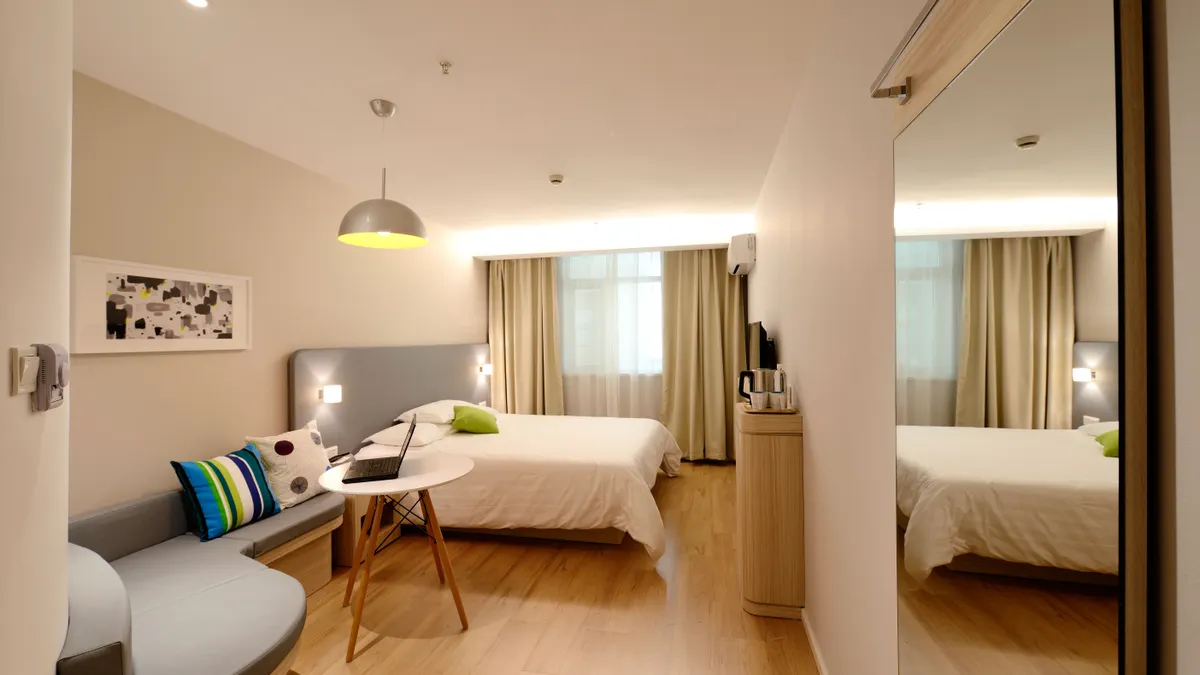
The features that save families the most money are a kitchenette, free breakfast, free parking, and a second sleeping zone. A king bed with a pullout sofa sounds flexible, but a real value room usually has a full-size fridge, a microwave, a sink, and a door or divider that keeps bedtime from turning into a group activity. That practical setup is central to Budget Family Trip Planning by Lodging Value and Room Features — The Complete Guide.
Kitchenettes are the clearest money saver on trips longer than two nights. A small fridge is enough for yogurt and leftovers. A microwave handles oatmeal, instant rice, and reheating. A sink matters more than many travelers expect because it makes bottle washing, fruit prep, and quick cleanup possible. If the listing only says “mini-fridge,” that usually means you can chill drinks, not stock a family’s food. In other words, the wording matters as much as the appliance.
Breakfast is more useful when it is genuinely broad enough for kids: oatmeal, eggs, fruit, toast, yogurt, or cereal. A pastry-and-coffee setup helps adults but rarely replaces a full family meal. The value is not just the food; it is the time saved. A free breakfast is worth less if it is so crowded that your family burns 30 minutes standing in line. For family trip planning, 30 minutes can be a big part of the morning.
Parking is one of the easiest hidden costs to overlook. In some destinations, paid parking can erase the apparent savings of a “budget” hotel. If you are driving to a theme park, beach town, or downtown core, check whether the property lists parking as free, self-park, valet-only, or limited. Even a reasonable nightly parking fee can matter over a four-night stay. The same room can look different once you add four nights of parking.
A separate sleeping area is not a luxury if you have a toddler, a teen, or two adults with different bedtimes. A suite, one-bedroom layout, or bunk-room setup can save your sanity and reduce the odds that the entire trip collapses into one room’s sleep schedule. That matters as much as square footage. In Budget Family Trip Planning by Lodging Value and Room Features — The Complete Guide, sleep separation can be a budget feature, not just a comfort feature.
Two queens, a suite, or an apartment-style stay?
A suite wins for most families because it gives you a separate place to sleep, sit, and stash gear without paying full apartment rates. Two queens are the better value only when the trip is short, the kids are small, and you will spend most of your time out of the room. Apartment-style stays win when the trip lasts four nights or more and the family will actually use the kitchen and laundry. The right choice depends on how much time you will spend inside.
Two queen beds are the simplest budget choice. They are common, easy to book, and usually cheaper than larger suite categories. They work best for a family of four that wants a standard hotel with daily housekeeping and a simple overnight base. The weakness is obvious: once bedtime starts, there is no private living area. If someone wakes early, the whole room wakes early. If one child needs to nap, the room shuts down. That makes the room easy to book but harder to live in.
Suites cost more, but they often deliver the highest comfort-to-dollar ratio. A one-bedroom suite with a sleeper sofa or a partition can let adults stay up after kids go to bed. That single feature can be the difference between a functional trip and a miserable one. The downside is that “suite” is a loose term. Some properties call a slightly larger room a suite even though it still has one sleeping area. The listing needs to show a separate room or at least a partial wall; otherwise, the label is mostly marketing. For Budget Family Trip Planning by Lodging Value and Room Features — The Complete Guide, the floorplan matters more than the label.
Apartment-style stays, including extended-stay hotels and vacation rentals, are best when the family needs a kitchen and does not want to eat every meal out. They can also be better for multi-generational trips because laundry and a full refrigerator reduce the usual pile of luggage and snacks. The trade-off is consistency. House rules, cleaning standards, and check-in processes vary more than in a standard hotel, and the final cost can rise after service fees, cleaning fees, and extra guest charges. According to Airbnb and the FTC, those extra charges are part of the real booking total.
For a budget family trip, the right rule is simple: choose two queens for a short, low-stress stay; choose a suite when you need real room separation; choose apartment-style lodging when meals and laundry are a major part of the budget. That is the core decision in Budget Family Trip Planning by Lodging Value and Room Features — The Complete Guide.
The real difference between hotel rooms and vacation rentals
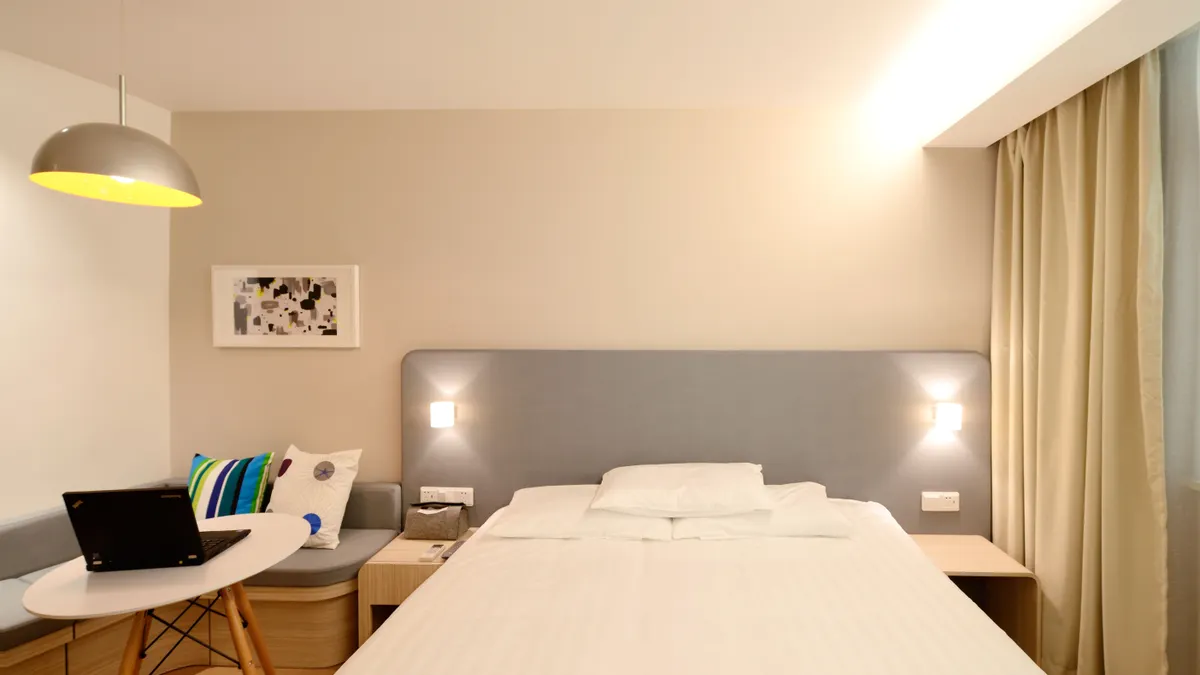
Hotel rooms win on predictability and short-stay convenience. Vacation rentals win on space and cooking capacity. For families, the choice usually comes down to whether the trip is built around convenience or self-catering. The better option is the one that matches the trip plan.
A hotel room is usually the better value when the trip is under three nights, when you need one-night flexibility, or when you expect to be out all day. You get front desk support, standard cleaning, and a familiar check-in process. If something breaks, there is someone to call. If a child gets sick, it is easier to ask for extra towels or a late checkout. The downside is that standard rooms are rarely built for family routines. The fridge may be tiny. The microwave may be missing. The floorplan may feel crowded by bedtime.
A vacation rental is usually the better value when the family wants a real kitchen, separate bedrooms, and a home base for multiple days. That matters most in expensive food markets or resort towns where every meal out is costly. The downside is that the advertised nightly rate often hides a fuller bill. Cleaning fees, service fees, security deposits, parking, and separate rules can push the total cost up. A family also gives up hotel conveniences like daily linen refresh, a staffed desk, and on-site problem solving. That trade-off is real, and it is why Budget Family Trip Planning by Lodging Value and Room Features — The Complete Guide keeps total cost front and center.
There is also a quality gap inside the vacation-rental category. One listing may have a proper crib, a dishwasher, and blackout curtains; another may just have a couch and a hopeful description. The more the trip depends on the lodging, the more important it is to read the actual amenity list line by line. If the listing does not clearly state a washer, dryer, crib, high chair, or full kitchen, do not assume it exists. The CDC also recommends checking practical needs carefully when children or special routines are involved.
The practical answer: hotels are for families who want fewer surprises; vacation rentals are for families who want more control over food and sleeping space. The wrong choice is the one that adds chores you did not plan to do. That is the simplest test in Budget Family Trip Planning by Lodging Value and Room Features — The Complete Guide.
The Honest Side-by-Side
A standard hotel room is the stronger value for short stays and low-maintenance trips. A vacation rental or apartment-style stay is the stronger value for longer trips, larger families, or anyone who needs a kitchen badly enough to use it daily. The contrast becomes clearer when the trip is already underway.
| Criteria | Standard hotel room | Vacation rental / apartment-style stay | Winner for condition |
|---|---|---|---|
| Base rate structure | Usually simpler nightly pricing, though parking and breakfast may cost extra | Often lower-looking nightly rate, but fees can change the total sharply | Hotel room for easy comparison |
| Kitchen access | Often just a mini-fridge and microwave | Often full kitchen with stove, oven, and dishwasher | Vacation rental for meal savings |
| Sleep separation | Usually one room, sometimes with two queens | More likely to have separate bedrooms or a living area | Vacation rental for sleep quality |
| Breakfast cost | Sometimes included, sometimes not | Usually self-catered | Hotel room if breakfast is included |
| Parking clarity | Often easier to verify at booking | Can vary widely by host or building | Hotel room for fewer surprises |
| Housekeeping support | More predictable daily or scheduled service | Less frequent or extra-charge cleaning | Hotel room for convenience |
| Laundry access | Sometimes on-site, sometimes absent | More likely to include in-unit or shared laundry | Vacation rental for longer stays |
| Food flexibility | Limited storage and prep | Better for snacks, toddler meals, leftovers | Vacation rental for families on a budget |
| Check-in reliability | Usually standardized | Can be self-check-in with variable instructions | Hotel room for late arrivals |
| Best trip length | 1 to 3 nights | 4 nights or more | Depends on trip length |
The table points to a clear pattern: hotels win when simplicity matters, rentals win when the lodging itself becomes part of the budget strategy. A family that eats breakfast out, keeps plans packed, and sleeps fine in one room does not need the complexity of a rental. A family that needs to cut restaurant spending, manage naps, or avoid constant bag repacking probably does. Budget Family Trip Planning by Lodging Value and Room Features — The Complete Guide works best when the room fits the routine.
The one area where generic advice fails is parking and breakfast. Many budget articles talk about room rates as if they were the whole price. They are not. On a family trip, a property with a slightly higher nightly rate but free parking and breakfast can beat a cheaper-looking place by a wide margin. If the listing does not spell those out, assume they are not included until verified. That is the safer reading until the property confirms the details.
How to choose lodging value by trip type
The right lodging changes with the trip, and this is where most families get better results by thinking like planners instead of shoppers. A beach trip, a city break, and a road-trip stopover each reward different room features. Once the trip type is clear, the room choice gets easier.
For a road trip, a clean hotel room with easy parking, a microwave, and breakfast is usually the better value. You want speed. A property near the highway with 24-hour check-in can be worth more than a prettier place that requires a long detour. For one night, a kitchen is usually wasted and a laundry room is irrelevant. The faster option is often the better option.
For a city trip, location often matters more than room size. A small room in a walkable area can beat a large suite far from transit. If you will use public transportation or ride-shares, the “cheap” hotel outside the center may cost more in transfers, parking, and lost time. In this case, the most useful room feature is not size but a layout that allows one adult to rest while the rest of the family moves around. Budget Family Trip Planning by Lodging Value and Room Features — The Complete Guide rewards location discipline here.
For a beach or theme-park trip, a kitchenette and laundry can be worth their weight in saved meals and fewer suitcase items. These are the trips where families stay long enough for the room to matter and spend enough time in the destination that food costs add up. A condo or suite with a small kitchen can turn a costly trip into a manageable one, especially if the property allows you to stock breakfast and snacks. That is where the stay starts paying back.
For visiting relatives, a budget suite often wins because you need somewhere to decompress between social time blocks. A standard room can feel cramped when family members are already spending time together elsewhere. The extra seating or separate sleeping space can protect relationships as much as the budget. In practice, that can matter more than a small nightly discount.
The key question is not “What is the nicest room?” It is “What does this room let me stop paying for?” If the answer is nothing, keep shopping. If the answer is a meal, a parking fee, or a second room, the value is clearer.
What to check before you book
A budget family stay becomes expensive when the listing hides fees or the room does not match the family’s actual needs. The check before you book does not have to be long, but it does need to be specific. In Budget Family Trip Planning by Lodging Value and Room Features — The Complete Guide, this is where many savings are won or lost.
First, confirm the total price before taxes and extras. Look for parking charges, resort fees, cleaning fees, and any charge for extra guests or rollaway beds. If a listing leaves those out, search deeper or contact the property directly. A room with a lower headline rate is not a better deal if it adds several unavoidable charges. The FTC recommends checking for unavoidable fees before purchase.
Second, check the sleeping layout. “Sleeps six” can mean a true two-bedroom suite, or it can mean two beds and a sofa bed in a single room. That distinction decides whether anyone will sleep well. For families with younger kids, ask whether the sofa bed is made up in advance or requires a late-night setup. A room that looks large online can still feel tight at bedtime.
Third, verify the food setup. A fridge, microwave, coffee maker, and sink are not interchangeable. If you plan to buy groceries, you need refrigeration and a place to prep them. If a hotel says “kitchenette,” confirm what that means. In many listings, it means only a microwave and mini-fridge. A real kitchenette should be described clearly, not implied.
Fourth, look at policies that affect family logistics: check-in time, late arrival rules, cancellation terms, crib availability, and whether quiet hours are enforced. Those details matter more than a decorative headboard. If the stay depends on a toddler nap or a late flight, the policy can affect the whole day.
If a property lists these items clearly, that is a good sign. If the description is vague, a cautious assumption is that the feature is limited or unavailable. That is the more honest approach for Budget Family Trip Planning by Lodging Value and Room Features — The Complete Guide.
When the overall choice should flip
The broad rule is hotel for short convenience, rental or suite for longer value. That rule flips in a few specific cases. The exceptions matter because family trips rarely fit one template.
Choose a hotel even for a longer trip when the destination is new, the travel dates are uncertain, or you need a staffed desk because your family arrives late or with a lot of moving parts. Hotels are also the safer choice if you dislike handling cleaning fees, house rules, or variable host communication. The predictability is worth the trade-off. If reliability matters most, the hotel stays ahead.
Choose a vacation rental or apartment-style stay even for a short trip when one person in the family needs a kitchen for medication, baby food, or a special diet. In that case, the kitchen is not a convenience; it is a necessity. A place with a real fridge and prep area can justify a higher total cost because it removes an actual barrier. This is where comfort and health overlap.
Choose a suite over both when bedtime is the hardest part of travel. If a separate sleeping area prevents the adults from sitting in the dark for four nights straight, the upgrade is not a splurge. It is a schedule fix. For some families, that kind of separation is worth discussing with a pediatrician or other appropriate professional if sleep routines or special needs are part of the decision, and it is worth reviewing guidance from the American Academy of Pediatrics on healthy sleep routines. The extra space can reduce the urge to overspend on meals out just to escape the room.
Do not pick the “value” option that is only cheap on paper. If the room is too cramped, too noisy, or too far from your plans, you will pay for the difference in restaurants, rides, patience, or lost sleep. That is the cost that shows up after the booking.
What I would choose for most families
Choose a standard hotel room with two queens if the trip is short, the family is out most of the day, and breakfast or parking is included. Choose a suite or apartment-style stay if the trip is four nights or longer, the family will eat in often, or bedtime needs a separate zone. Neither if the listing hides major fees, lacks the sleeping setup you need, or forces you to pay extra for basic family functions like parking and refrigeration. That is the practical answer in Budget Family Trip Planning by Lodging Value and Room Features — The Complete Guide.
That is the cleanest verdict because budget family travel is not about finding the absolute lowest rate. It is about buying back the parts of the trip that tend to cost the most: sleep, meals, and time. A room that handles those three well is the one that stays valuable after checkout. When a stay passes that test, the rate matters less than the result.
Key Takeaways
- The cheapest room is not always the best deal once parking, breakfast, and food costs are counted.
- Kitchen access matters most on trips longer than two nights.
- A separate sleeping area is worth real money when bedtime or naps are part of the schedule.
- Hotels are usually better for short, simple trips; apartment-style stays usually win for longer, self-catered trips.
- The best booking is the one that removes expenses you would otherwise pay for elsewhere.
Drafted with AI; not yet reviewed by a person.