

Last updated: August 10, 2026
- Key Facts – 3 days is short enough that transit time matters as much as sightseeing.
- A good 3-day budget family trip is not about stuffing every hour.
- Quick Answer: For most families, a 3-day budget family trip works best as one base, one paid highlight, and two free or low-cost days .
- A city weekend usually beats a road-trip loop for lower stress and fewer surprise costs.
Quick Answer: For most families, a 3-day budget family trip works best as one base, one paid highlight, and two free or low-cost days. A city weekend usually beats a road-trip loop for lower stress and fewer surprise costs.
Key Facts
– 3 days is short enough that transit time matters as much as sightseeing.
– A simple plan has 1 hotel or rental base, 1 paid anchor, and 2 free or low-cost activities.
– For many families, parking, snacks, and extra driving are the costs that grow fastest.
– The safest budget strategy is to keep the trip to one neighborhood or one loop with 2–3 stops max per day.
– If your child gets carsick, tired quickly, or overwhelmed, consult a pediatrician or travel professional before choosing a long-drive itinerary.
A good 3-day budget family trip is not about stuffing every hour. It is about one base, short hops, and a plan that still holds together when a child gets tired, a meal runs long, or the sky goes gray. Honestly, that is where the money gets saved. For the easiest call, I would pick a simple city-plus-park weekend over a road-trip marathon almost every time for a family trying to save money and sanity.
I write a lot about family travel planning, and the same pattern shows up again and again: trips that look cheap on paper can turn costly and exhausting fast. The smartest 3-day plan limits transit, uses free or low-cost anchors, and leaves room for one paid highlight instead of three. That is the lens I am using here. Simple. Not fancy.
The Real Difference Between a City Weekend and a Road-Trip Loop
A city weekend wins for families who want predictability. A road-trip loop wins for families who care more about flexibility and can tolerate more moving parts. The difference is not just scenery; it is how much friction you build into the trip. And friction has a way of showing up in the budget.
For a budget family, a city base usually keeps spending cleaner. You can walk more, use one hotel or rental for all three nights, and line up free attractions in one neighborhood. The risk is boredom if you overplan the same type of activity three days in a row. The fix is to mix one museum or indoor stop, one park or playground block, and one small treat. When a child has medical, sensory, or mobility needs, it is worth checking with a pediatrician or travel professional before you lock in that mix.
A road-trip loop looks cheaper when you first sketch it because you may find lower nightly lodging outside major centers. The hidden cost is time. More driving means more gas, more snack stops, and more chances to pay for convenience when kids melt down. It also means you spend a larger share of each day getting from place to place. That can make a “budget” trip feel expensive in energy. Like sand in a gear.
My rule: choose a city weekend if your youngest traveler struggles with long car stretches or when you want the trip to feel restful. Choose a loop only if the drive itself is part of the fun and your family handles transitions well. No mystery there.
City Weekend: Who Should Actually Use This (and Who Shouldn’t)
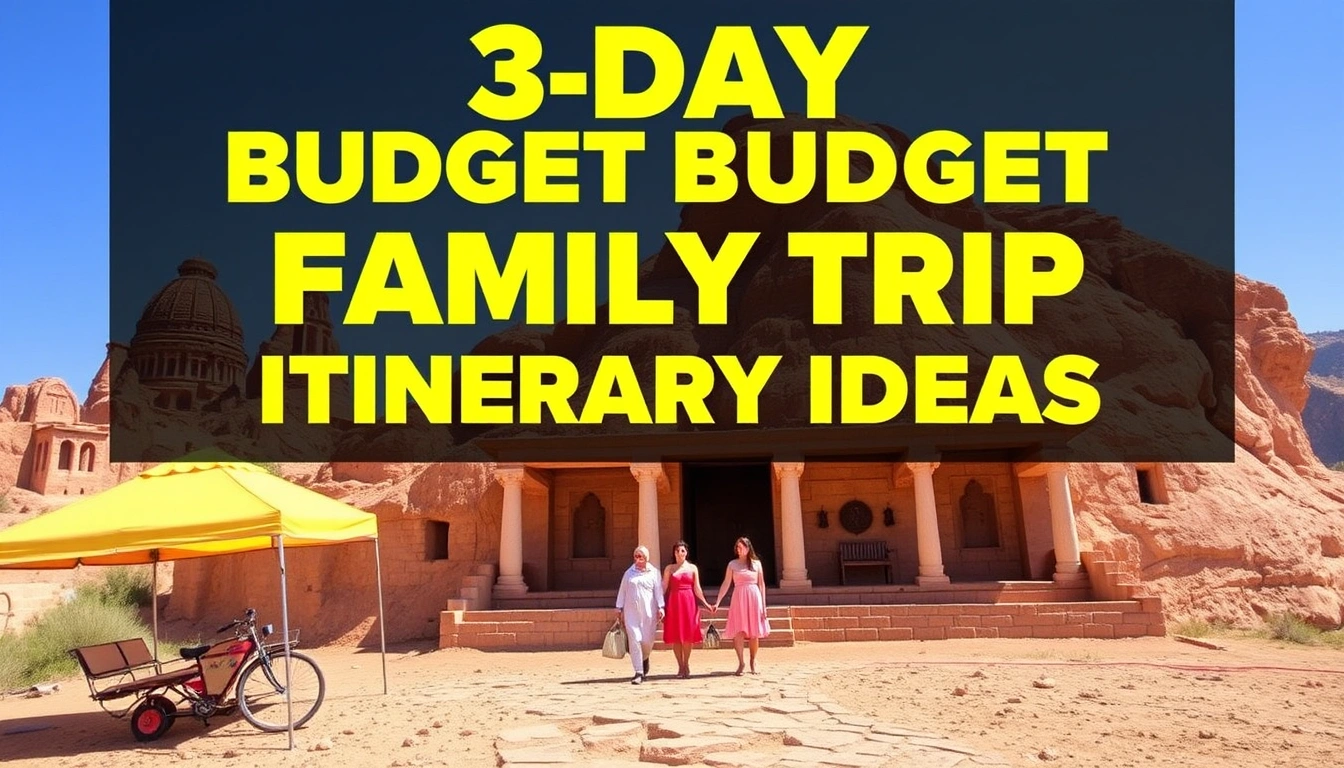
A city weekend wins for parents who want the fewest moving pieces. With one hotel, a walkable downtown, a public park, and a couple of free indoor options, you can build a full 3-day itinerary without turning every hour into a transaction.
The strength here is control. Breakfast can be simple. Lunch can be picnic food or a quick counter-service stop. You can return to the room for naps, forgotten jackets, or a break from overstimulation. That matters more than people admit. A budget trip gets ruined faster by cranky kids than by one expensive meal. Honestly, the vibe can sour in ten minutes.
Here is the kind of family I would steer to this format: one to three children, mixed ages, modest tolerance for schedule changes, and a preference for short walks over long drives. It also works well if you are new to budget travel and do not yet trust yourself to pack, plan, and pace a long day on the road.
The weakness is that city weekends can feel pricey if you choose the wrong base. Parking, resort fees, tourist-area meals, and paid attractions can pile up quickly. Another downside is sensory overload. Crowded sidewalks, lines, noise, and constant choices can wear out younger children and parents alike. When your family needs quiet or space, a dense urban trip may be the wrong kind of cheap.
My honest take: this is the better budget option when your goal is to spend less without making the trip feel stripped down. It is not ideal if your family needs big open spaces, a lot of unscheduled play, or free parking everywhere. Sometimes the “cheap” choice gets squishy fast.
Road-Trip Loop: The Specific Situations Where It Wins
A road-trip loop wins when the destination is less important than the stops along the way. I would choose it for families who like variety, want to see more than one town, and can turn the car into a place where kids actually settle in.
The main advantage is that you can string together lower-cost experiences: a state park in one town, a small museum in another, a beach or lake stop on the third day. That kind of trip can feel richer than staying in one city, especially if your family gets restless in the same setting too long. When you are planning around free outdoor time, the loop format can be very forgiving. Almost too forgiving.
It also works well for families that travel with gear. Coolers, snacks, folding chairs, and swim stuff are easier to manage when the car stays with you. You are less dependent on restaurants and paid convenience stops.
The trade-off is that your budget can leak in small, annoying ways. More driving means more fuel, more tolls in some regions, and more temptation to buy food because everybody is hungry at odd times. A loop also raises the odds that one bad stop ruins the mood for half a day. If you have a child who gets carsick, melts down in traffic, or cannot sit still for long stretches, this format can be a miserable bargain.
My view: this is the right choice only if your family enjoys the transit part and you are disciplined about limiting the number of stops. When you want a smooth-feeling trip, the loop is harder to manage than it looks. The wheels keep turning.
The Honest Side-by-Side
The best choice changes when you look at the practical details that actually shape a family trip. Here is the comparison I would use before booking anything.
| Criteria | City Weekend | Road-Trip Loop | Winner for [condition] |
|---|---|---|---|
| Planning simplicity | One base, fewer moving parts | Multiple stops, more to coordinate | City Weekend for first-time planners |
| Child fatigue | Less time in transit, easier to reset | More car time, more transition stress | City Weekend for younger kids |
| Weather risk | Can pivot to indoor options more easily | Outdoor stops can get canceled by weather | City Weekend for unpredictable forecasts |
| Food budget control | Easier to repeat simple meals and picnics | More convenience purchases on the road | City Weekend for strict budgets |
| Variety | Can feel repetitive unless you plan well | More built-in scenery and stop variety | Road-Trip Loop for families who get bored easily |
| Rest breaks | Easy to return to the room midday | Breaks depend on where you can stop | City Weekend for nap-heavy ages |
| Packing burden | Moderate | Higher, because the car becomes your base | City Weekend for light packers |
| Budget flexibility | Can be efficient when you use free parks and public spaces | Can be efficient if lodging outside cities is favorable | Tie, depending on your route and lodging |
| Stress if plans change | Lower, because you stay put | Higher, because one delay affects the whole day | City Weekend when you need cushion |
This table is why I usually steer families toward a city base. The fewer chain reactions in the plan, the fewer chances there are for the budget to blow up in little ways. The road-trip loop only wins when variety matters enough to justify the added logistics. Plain and simple.
Our Verdict: Which One to Choose and Why
Choose a city weekend if you want the most reliable 3-day budget family trip with the least stress. Choose a road-trip loop if your kids enjoy long drives, you want more scenery, and you can keep stops tight. Neither if your family is already exhausted, overbooked, or trying to force too many “must-see” attractions into one short weekend. Really, that third option is the trap.
That is the blunt answer I would give a friend. For most families, the city weekend is the safer, smarter pick because it protects both money and mood. It makes free activities easier to use well. It makes meals easier to control. It gives you a real chance to rest between activities instead of turning the trip into a checklist.
For a trip that feels memorable without feeling expensive, I would build it around three anchors: one free outdoor block, one paid attraction, and one low-cost neighborhood activity. That structure works in a city and, with more effort, on a loop. It is just easier to pull off when you are not packing and unpacking every day. Closer to home base, less chaos.
The road-trip loop is not a bad choice. It just asks more of the adults. When you are already stretched thin, that added complexity is the exact thing I would cut first.
A 3-Day Budget Family Itinerary That Actually Works
If I were planning this from scratch, I would use a city base and keep the days simple.
Day 1 should be about settling in rather than checking boxes. Arrive early if possible, grab groceries or picnic food, and do one low-cost afternoon activity. A park, waterfront path, or neighborhood walk is enough. Save the paid attraction for after everyone has settled in. The point is to avoid wasting the first day on errands and hunger. No heroics.
Next, make Day 2 the main outing day. Pick one anchor attraction that gives you the most value for the money, then build around it with a free lunch spot and one second activity that does not require much cash. A museum, zoo, garden, science center, or historic district can all work, but I would choose only one major paid stop. Two is where the budget gets brittle.
Then keep Day 3 loose. I like a slow breakfast, a last playground stop, and an early checkout or departure. When you push for a full agenda on the final day, you end up paying in snacks, frustration, and rushed decisions. A short final morning also leaves room for traffic.
When you are doing a road-trip loop instead, I would still borrow the same structure: one anchor stop per day, one free outdoor block, and one simple overnight base. Do not try to “use the road” to create more content. That is where families overspend.
How to Build the Trip Step by Step
Since the plan works best when it stays simple, start with the base, then choose the anchor, then fill the gaps.
- Pick one city or one loop with no more than 2–3 main stops per day.
- Book the lodging first, because one base usually controls the budget better than a scattered route.
- Add one paid highlight and at least two free or low-cost activities.
- Leave one block each day unscheduled for naps, snacks, or weather changes.
- Check parking, fuel, and restaurant costs before you confirm the plan.
After that, review the day order and cut anything that makes you switch locations too often. When the itinerary still works with one attraction removed, it is probably the right size.
When to Reconsider This Choice Entirely
The verdict flips in a few situations, and I would be dishonest if I did not say so.
Your family hates hotels and sleeps better in the car or in a cabin? Then the city-weekend model may be the wrong fit. In that case, a camping-style trip or cabin base may beat both options because it cuts lodging stress and gives kids more open space.
Very large family group? A city trip can become awkward fast. One room or even two rooms may not give enough space, and constant coordination in a dense area gets tiring. A loop with a rental house or family cabin can be better when it gives everyone room to breathe.
When your destination city has expensive parking, limited free attractions, and everything is spread out, I would rethink the city base. A “budget” city can stop being budget-friendly once transit and parking enter the picture.
Teenagers who want novelty and do well with long stretches in the car? The road-trip loop may actually be the better memories-per-dollar option. Older kids often tolerate the transit that younger children hate.
My final recommendation is still the same for most readers: pick the city weekend first, make the plan smaller than you think you need, and use one paid highlight as the center of the trip. Budget family travel usually fails from overstuffing, not from lack of ambition.





Leave a Reply